Where to see the best wildflowers in Australia this spring

hero media
It’s spring, so you know what that means… it’s wildflower season in Australia!

From the end of winter through to the beginning of the new year, down under blossoms with spectacular floral displays. Keen to see the country’s incredible biodiversity in full bloom? Below we’re sharing our guide on the best places to see wildflowers in Australia.

Wildflower Country, Western Australia

When it comes to wildflower displays, Western Australia is fortunate enough to have the most incredible, awe-inspiring one in the country.

Every state in Australia is blessed with floral flourishes from an array of native flora, but WA puts on one of the largest shows of wildflowers on Earth, with more than 12,000 species contributing to the wistfully ephemeral annual spectacle.

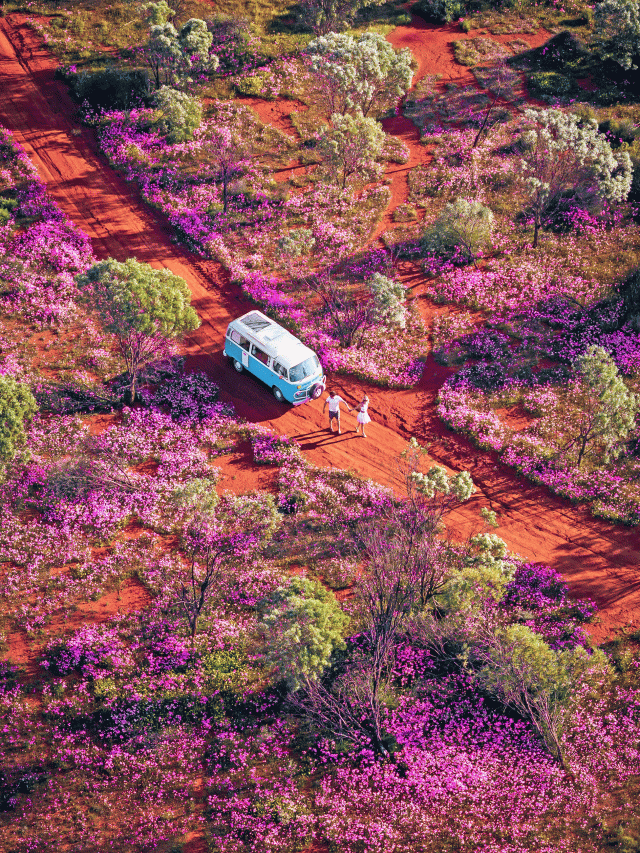
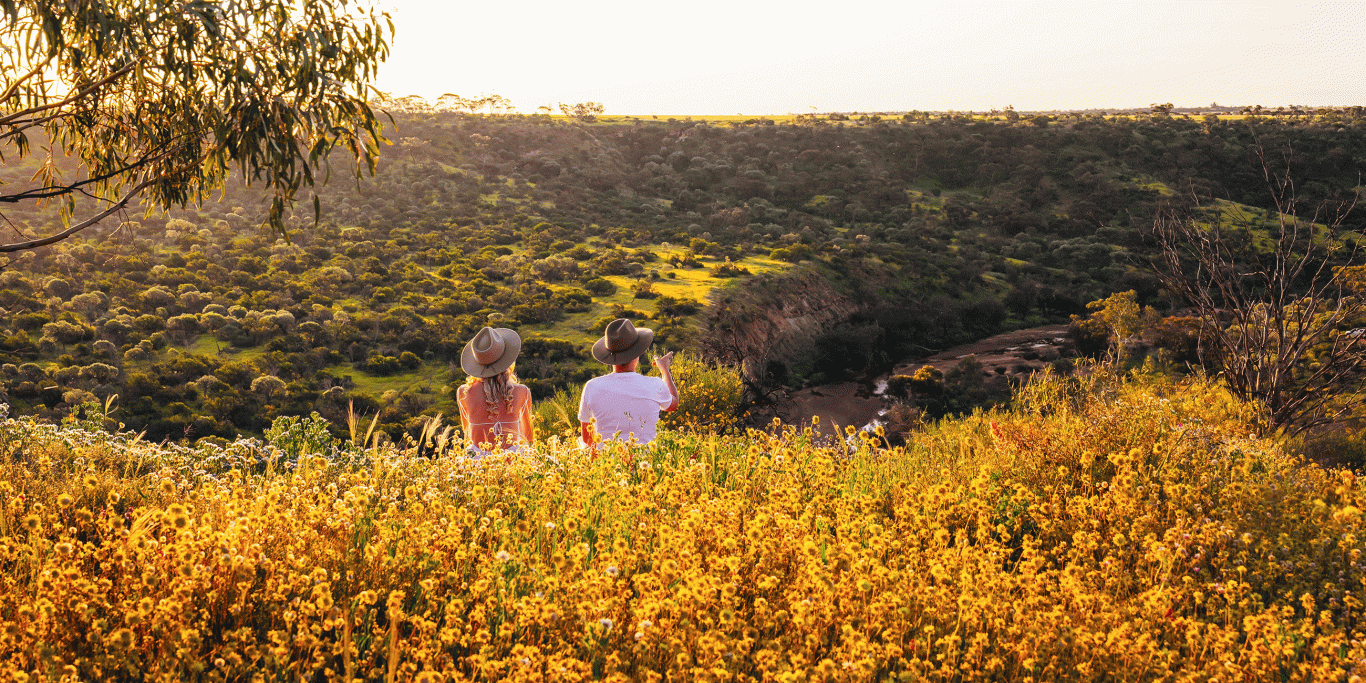
Wildflowers in Coalseam Conservation Park in WA.
WA puts on one of the largest shows of wildflowers on Earth. (Image: Tourism Western Australia)

Of these, an impressive 60 per cent are completely unique to the state and cannot be seen anywhere else on the planet.

When to see them: From August to October

Yellow Wildflowers in canna in Western Australia
WA has more than 12,000 species of wildflowers. (Image: Tourism Western Australia)

Grampians National Park, Victoria

The Grampians (Gariwerd) has been described as the garden of Victoria as it houses more than one-third of Victoria’s flora. The state’s floral emblem, pink common heath, is found in abundance here.

The season of wildflowers, or Petyan, is one of the region’s six distinct weather periods outlined by the region’s traditional owners.

When to see them: From August to November

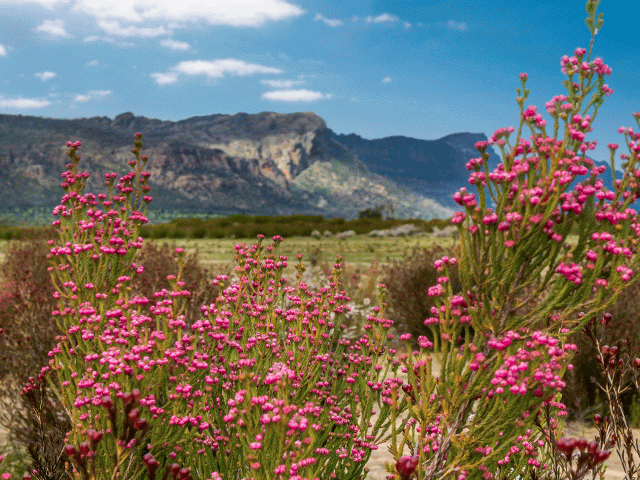
Pink wildflowers in Grampians National Park, Victoria, Australia
The Grampians houses more than one-third of Victoria’s flora.

Need tips, more detail or itinerary ideas tailored to you? Ask AT.

AI Prompt

Larapinta Trail, Northern Territory

The Larapinta Trail takes trekkers 223-kilometre over at least 12 days, through Central Australia’s West MacDonnell Ranges, home to nearly 600 species of rare flora.

Heading along this trail will give you an up-close-and-personal look at the beauty of the Northern Territory’s wildflowers. Delicate purples and bright yellow curry wattles are among splashes of colour often contrasting with the red desert along the route.

When to see them: May or from August to September

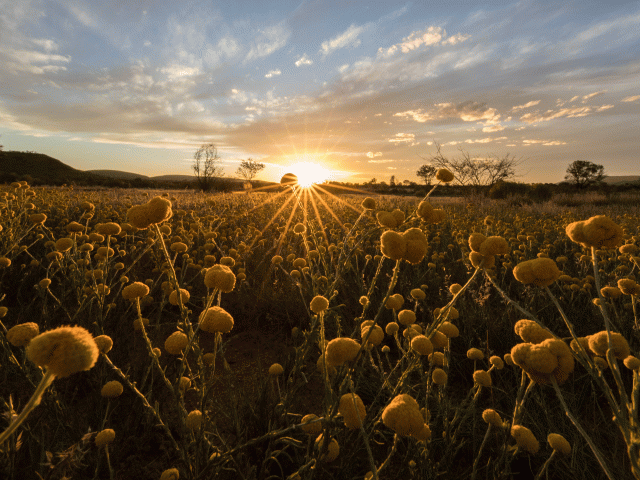
Wattles blooming along the Larapinta Trail in the Northern Territory
Bright yellow curry wattles are among splashes of colour often contrasting with the red desert along the Larapinta Trail. (Image: Tourism NT/Sean Scott)

Flinders Ranges and Outback, South Australia

Spring is a spectacular time in the Flinders Ranges, with so many wildflowers enhancing the amazing landscape. Thanks to the rain from winter, wildflowers and native plants envelop the landscape with bursts of colour.

Mount Remarkable National Park in Southern Flinders is only a few hours from Adelaide, and spots like Alligator Gorge will be full of wildflowers as spring progresses as well.

When to see them: From September to November

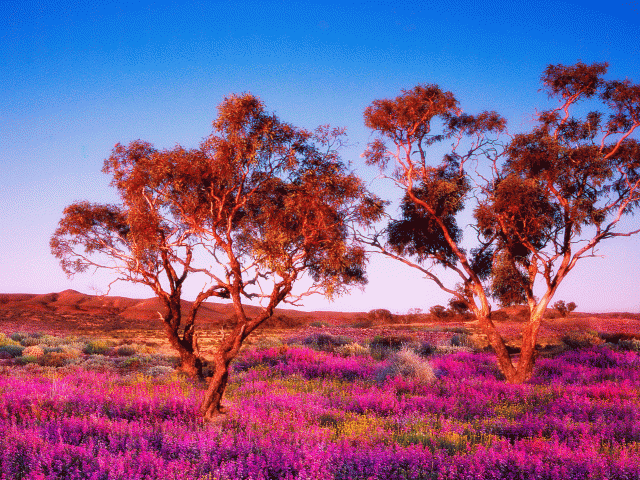
Purple and pink flowers on the Oodnadatta Track in the Flinders Ranges.
Wildflowers and native plants envelop the landscape with bursts of colour. (Image: Julie Fletcher)

Kosciuszko National Park, New South Wales

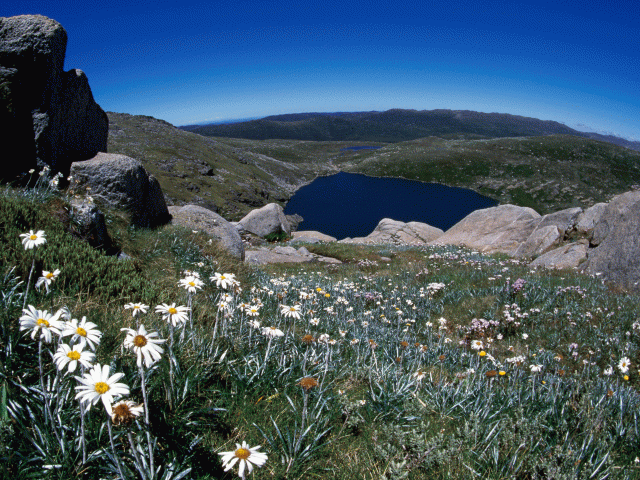
Kosciuszko National Park is roughly a 5.5-hour drive from Sydney or 2.5 hours from Canberra and is home to some of the best winter activities in the country in the Snowy Mountains. But, winter isn’t the only time to enjoy the beauty here.

In spring, pops of purple, yellow and pink cover the alpine fields. Hundreds of species grow here, including 21 that are unique to the area.

One of the nicest ways to see them is along the Kosciuszko Walk, which travels for 13 kilometres from Thredbo to the summit of Mount Kosciuszko. Or you can drive the Alpine Way from Canberra to Thredbo, then wind through prime wildflower territory on the Kosciuszko Summit Walk or cycle past high-altitude florals on the Thredbo Valley Track.

When to see them: From August to early October

Wildflowers in Snowy Mountains National Park
In spring, pops of purple, yellow and pink cover the alpine fields. (Image: Tourism Australia)

Weekly travel news, experiences
insider tips, offers, and more.

Sunflower Farms, Queensland

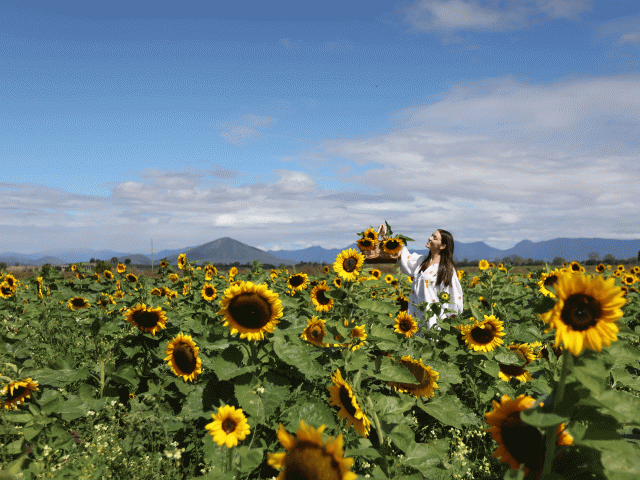
Sunflowers grow in various spots around Queensland, and when they choose to bloom is largely up to the elements.

Your best chance of seeing them in full bloom is to head to the Toowoomba and Warwick regions. Some hot spots are Allora, Nobby, Clifton, Freestone and Felton. But hey, to be on the safe side, check in with the Toowoomba and Warwick tourism offices before you jump in the car.

When to see them: From January to March (weather dependent)

Family in sunflower field in Warraba in Queensland.
Get your sunflower fix in the Sunshine State. (Image: Tourism and Events Queensland)

This article was originally written by Emily Murphy with updates by Rachael Thompson.

Want to see more stories from Australian Traveller in your Google search results?

  1. Click here to set Australian Traveller as a preferred source.
  2. Tick the box next to "Australian Traveller". That's it.
Emily Murphy
Emily Murphy is Australian Traveller's Email & Social Editor, and in her time at the company she has been instrumental in shaping its social media and email presence, and crafting compelling narratives that inspire others to explore Australia's vast landscapes. Her previous role was a journalist at Prime Creative Media and before that she was freelancing in publishing, content creation and digital marketing. When she's not creating scroll-stopping travel content, Em is a devoted 'bun mum' and enjoys spending her spare time by the sea, reading, binge-watching a good TV show and exploring Sydney's vibrant dining scene. Next on her Aussie travel wish list? South Australia and The Kimberley.
View profile and articles
hero media

Mornington Peninsula’s storied past: war, shipwrecks and a runaway convict 

    Kellie Floyd Kellie Floyd
    The Mornington Peninsula is a coastline of contrasts, where convict and military history meets shipwrecks, wild seas and adventures above and below the surface.

    The Mornington Peninsula can be the kind of place where salt-tangled hair feels like a badge of honour – proof you’ve been somewhere wild, raw and real. Peel back the layers and you’ll discover stories that anchor this region to something other than its famed food and wine.

    This land is the traditional Sea Country of the Bunurong/Boon Wurrung people. Long before grapevines were planted and artisanal goods were crafted, the Bunurong Traditional Owners lived in deep connection with the land and sea. Today, places such as Mushroom Reef Marine Sanctuary echo that tradition, with families exploring its rockpools in search of colourful sea stars and crabs at low tide and learning how these fragile ecosystems have been cared for across countless generations.

    a group of people visiting the Port Nepean National Park
    Take in the rugged coastal landscape at Port Nepean National Park. (Image: Tourism Australia)

    A visit to Point Nepean National Park feels like stepping back through time. The fort, built in 1882, protected the narrow entrance to Port Phillip Bay until the end of the Second World War. It was here that the first Allied shot of the First World War was fired – at a German cargo ship trying to escape just hours after war was declared. Nearby, the old Quarantine Station, one of Australia’s first permanent quarantine facilities, established in 1852, still stands. Walking through the hospital and disinfecting complex evokes stories of those who arrived from faraway shores.

    Not far from here is a story of survival that inspired the Aussie phrase ‘you’ve got Buckley’s chance’. In 1803, escaped convict William Buckley vanished into the bush near what’s now Sorrento. Everyone thought he had no hope of surviving, but he reappeared 32 years later, having lived with local Aboriginal people.

    Even the waters here hold history. The infamous stretch known as The Rip, just three kilometres wide at the entrance of Port Phillip Bay, is among the most treacherous waterways. Countless ships were lost here in the 19th and early 20th centuries, and in 1967, Australia’s own Prime Minister Harold Holt disappeared while swimming off the coast, never to be found.

    a seal swimming in Port Phillip Bay
    A seal swimming in Port Phillip Bay. (Image: Tourism Australia/Two Palms/Harry Pope)

    But for all its danger, the sea here also holds extraordinary beauty. Dolphins are often seen near Sorrento’s cliffs, while below the surface, seagrass meadows and rocky reefs teem with life. Marine tours offer a viewing to this underwater wonderland, while back on terra firma, walking trails lead along beaches, through coastal scrub, and over rock pools.

    And if you think you’ll forget about the Mornington Peninsula once you’ve left? You’ve got Buckley’s chance.

    A traveller’s checklist

    Staying there

    the suite interior at InterContinental Sorrento
    Luxury interiors at the historic InterContinental Sorrento. (Image: Greg Elms)

    Point Nepean Discovery Tents is immersive glamping beside the historic Quarantine Station. Or upgrade to luxury at the 1875-built InterContinental Sorrento.

    Playing there

    an aerial view of Cape Schanck Lighthouse
    Make your way to the Cape Schanck Lighthouse. (Image: Tourism Australia/Two Palms/Harry Pope)

    Bayplay Adventure Tours offer eco-adventures from snorkelling with sea dragons to kayaking with dolphins and cycling Point Nepean. Cape Schanck Lighthouse is fascinating to explore on a guided tour, which takes you into the lighthouse and keeper’s cottage.

    Eating there

    Portsea Hotel is a beautifully restored 1876 Tudor-style pub right on the beach, serving seasonal local fare.