The great road trips of NSW: Central to Outback itinerary

hero media
Looking for the quintessential NSW road trip? Drive from Dubbo to Broken Hill on a meander from Central West to Outback through some satisfying stereotypes – but many surprises, too.

Red earth, vast skies, vast floodplains and bony, rugged landscapes meet in western NSW, best explored on a traditional outback road trip with dust behind your car and adventure up ahead. Wide-open spaces and national parks provide inspiring landscapes where kangaroos bounce, emus flee and seasonal lakes and rivers are loud with migrating waterbirds.The eye-squinting, soul-expanding horizons lure you on to adventure, whether you’re a Mad Max or Priscilla type of traveller. Meanwhile, heritage attractions range from ancient Aboriginal rock art to colonial-era history and modern-day mining towns. Settle into a pub and you can be sure a bearded miner, outback eccentric or traditional Aboriginal owner will have a tale to tell.

These are the happy, expected experiences on a Central-to-Outback road trip, but there are abundant surprises, too, not least increasingly sophisticated restaurants and regional museums, some avant-garde architecture and a thriving arts scene.

Begin in Dubbo: for the Indigenous culture

Buckle up for the 790-kilometre drive in Dubbo, where your first surprise might be that giraffes have blue tongues, and wombat poo is shaped like a cuboid. The kids will love all this and much more at Taronga Western Plains Zoo.
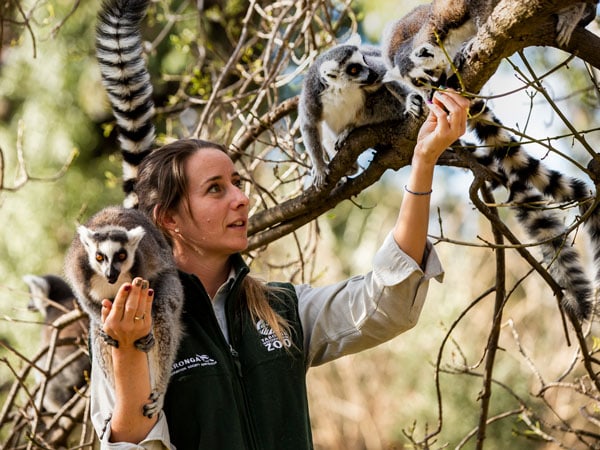
Taronga Western Plains Zoo
Get up close to the animals at Taronga Western Plains Zoo.

Cycle or drive its six-kilometre circuit for a leisurely encounter with 4000 creatures in a safari-like setting. For an extra thrill, stay at a luxury Zoofari Lodge, and take a behind-the-scenes tour with a zookeeper.
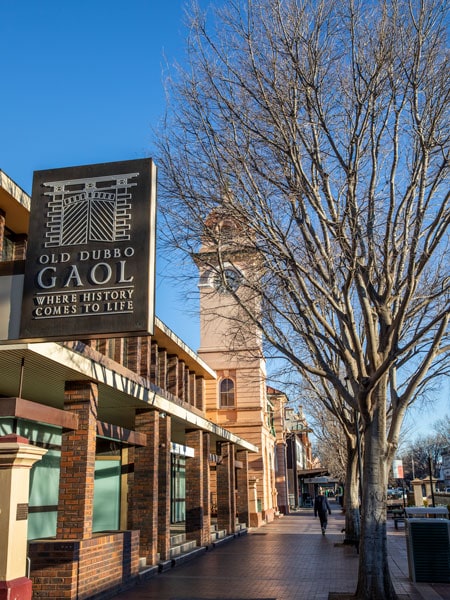
Visit Old Dubbo Gaol
Visit Old Dubbo Gaol for an interactive history lesson. (Image: DNSW)

While the zoo is a must, Dubbo has other attractions, including a cellar door at Red Earth Estate and historic – and somewhat spooky – site Old Dubbo Gaol. For the region’s connections with Indigenous culture, take a First Lesson Cultural Tour with Wiradjuri elder Peter Peckham.
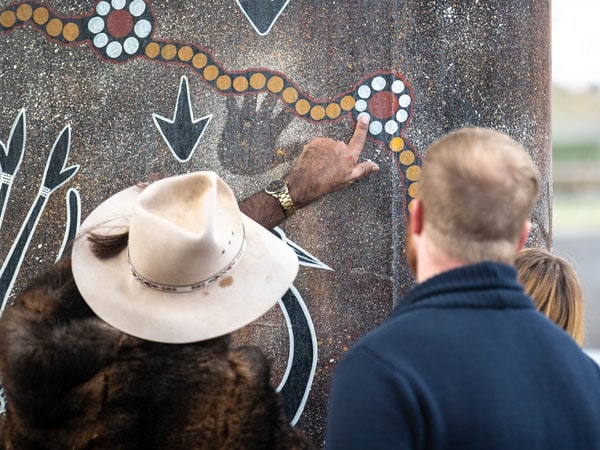
First Lesson Cultural Tour
Take a First Lesson Cultural Tour with Wiradjuri elder Peter Peckham. (Image: DNSW)

Dubbo to Nyngan: for cathedral-quiet art walks

As you head west, Nyngan is the last agricultural town before sun-kissed wheat fields give way to red earth. The town’s bright-red, historic railway station houses a museum detailing Nyngan’s boom-and-bust heritage.

Connect with culture on an Aboriginal art walk at Mount Grenfell and discover the painted figures of animals, people and Dreamtime stories of the Ngiyampaa people. Active travellers will enjoy kayaking on Macquarie Marshes. As you journey onwards, watery reflections are soon left behind and flamboyantly arid landscapes take over.

Need tips, more detail or itinerary ideas tailored to you? Ask AT.

AI Prompt

Nyngan to Cobar: for rich mining history and colonial heritage

At Cobar you’re now deep in the outback. The town’s grand colonial churches, pubs and houses are a reminder of Cobar’s first flourishing during the 1870s gold rush, which you can learn more about at the Great Cobar Heritage Centre, set to reopen soon following renovations. Gold and copper are still being mined here; Fort Bourke Hill Lookout allows for a gobsmacking look into an open-cut mine.
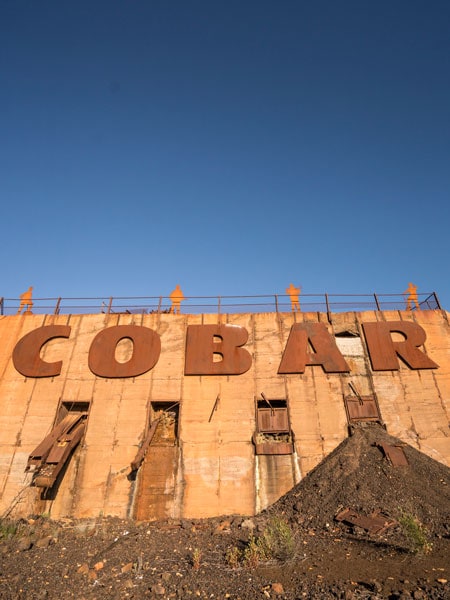
Cobar
At Cobar you’re now deep in the outback. (Image: DNSW)

You might stay in one of several motor inns or Cobar Caravan Park, but this driving adventure offers a great variety of accommodation, from a cottage on a working cattle station to rooms above an old-time pub. You might also opt for the charm of a B&B, heritage homestead or national-park campsite under the stars.
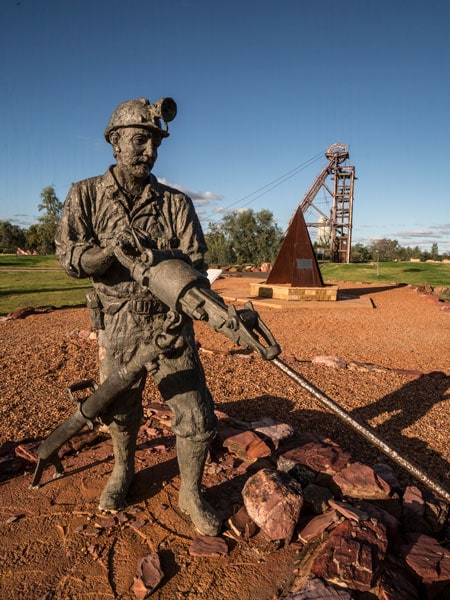
Cobar Miners Heritage Park.
Visit the Great Cobar Heritage Centre and Cobar Miners Heritage Park. (Image: DNSW)

Cobar to Wilcannia: to delve deep into nearby national parks

Wilcannia, once one of the busiest inland ports in Australia thanks to the wool trade, is now slumped in the gum-scented heat of the outback. Sandstone colonial-era buildings – police station, post office, wool stores – attest to the settler history of this atmospheric town on the Darling River, which shimmers with sunsets and the silhouettes of paddling pelicans.
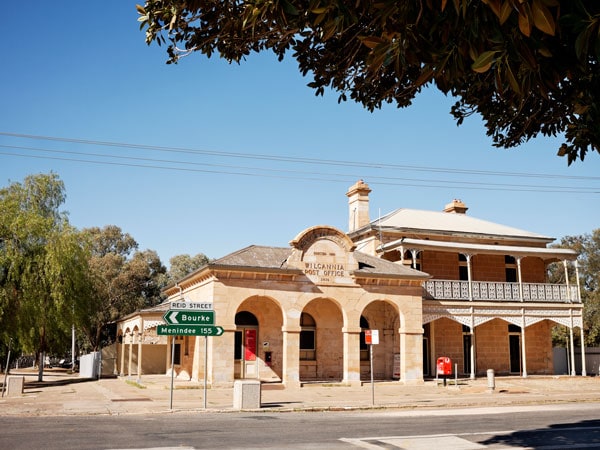
Wilcannia
Wilcannia was once one of the busiest inland ports in Australia. (Image: DNSW)

Make a detour north to Paroo-Darling National Park. It might be 1200 kilometres from the ocean, but you can spot pelicans among its teeming birdlife, which includes emerald-green mulga parrots, pink cockatoos and bustards, one of Australia’s largest flying birds.
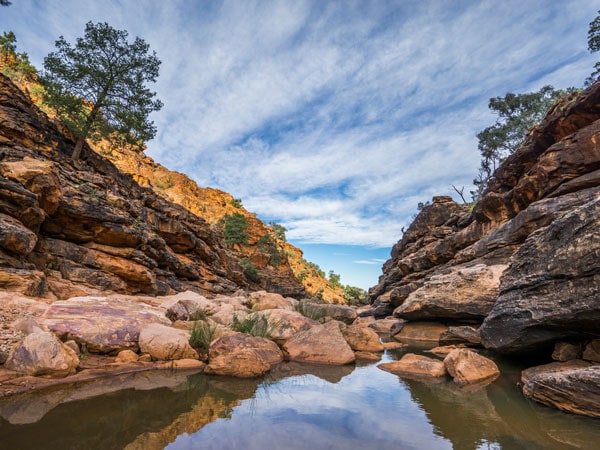
Mutawintji National Park
Find rock pools in colourful gorges in Mutawintji National Park. (Image: DNSW)

Another worthy excursion takes you to Mutawintji National Park, close to the home of the rare yellow-footed rock wallabies. Rock pools in colourful gorges provide a reliable water supply that attracts corellas, zebra finches and wedge-tailed eagles. But the national park also features one of NSW’s best rock-art collections, best explored with an Indigenous guide from Mutawintji Heritage Tours.

Wilcannia to Broken Hill: the creative capital of the Outback

Head towards Broken Hill over scorched orange plains and silvery saltbush under a vast sky. The immensity of the landscape is both intimidating and exhilarating, but if you expect Broken Hill to be no more than a hard-core, isolated mining town, think again.
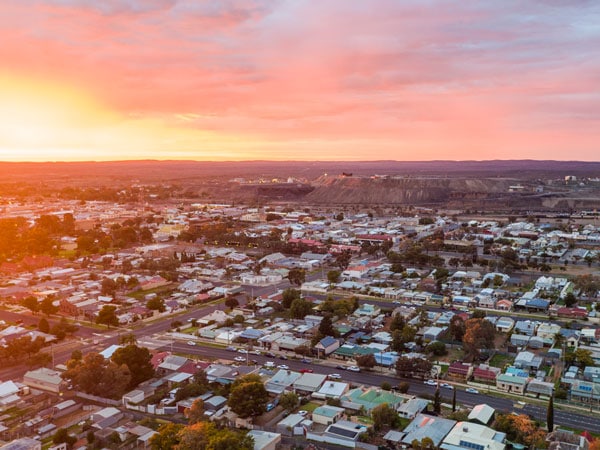
Broken Hill NSW
Sunrise over Broken Hill. (Image: DNSW)

You’ll want to linger for heritage buildings, museums and varied restaurants. Broken Hill has also been a vibrant creative centre since the 1960s, and boasts dozens of art galleries and studios and the largest regional public art gallery in NSW.
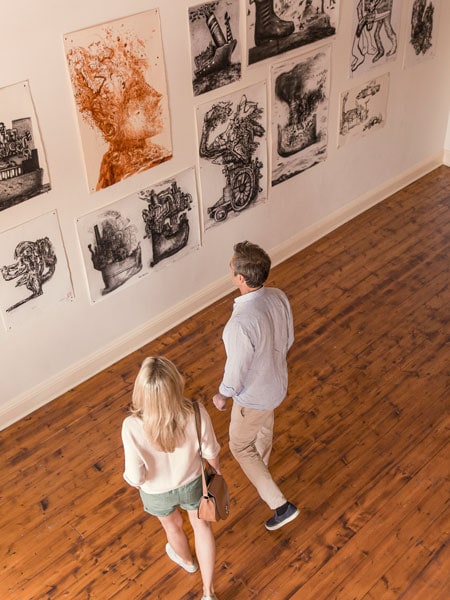
Broken Hill Regional Art Gallery
Don’t miss Broken Hill Regional Art Gallery. (Image: DNSW)

Also encouraging you to linger are great accommodation choices, from the restored miner’s home Hebbard Cottage to the stunning Broken Hill Outback Resort. And who could resist an evening (or two) at The Palace Hotel, the mural-clad pub made infamous in Priscilla, Queen of the Desert.
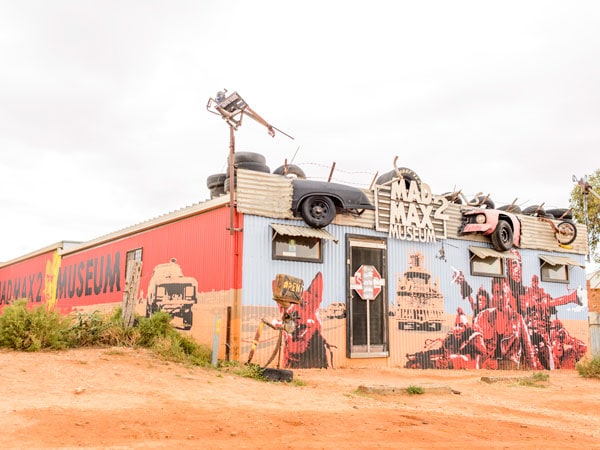
Mad Max Museum
Visit Mad Max Museum in the ghost mining town of Silverton. (Image: DNSW)

Drive out to ghost mining town Silverton and you might find yourself with another sense of déjà vu, especially if you have a beer at the legendary Silverton Hotel. Some 140 television commercials have been filmed here, as well as numerous iconic movies including Mad Max, Priscilla and Mission Impossible II.
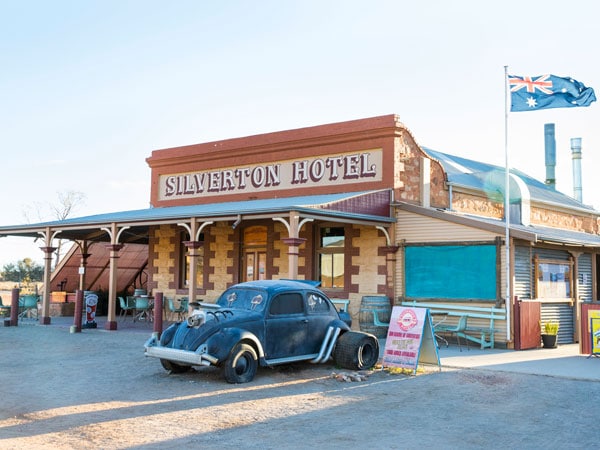
Silverton Hotel
Have a beer at the legendary Silverton Hotel. (Image: DNSW)

The landscape is cracked into fissures across the Mundi Mundi Plains, splintered like a smashed pane of glass. Sunsets here are magnificent, but are perhaps even better at Living Desert and Sculptures on a hillside outside Broken Hill. As the sun sets with orange outback flamboyance behind rocky ridges and purple hills, you couldn’t be in a more inspiring place.

Make sure you stay up to date with the road conditions before you set off with the latest travel alerts at Visit NSW.
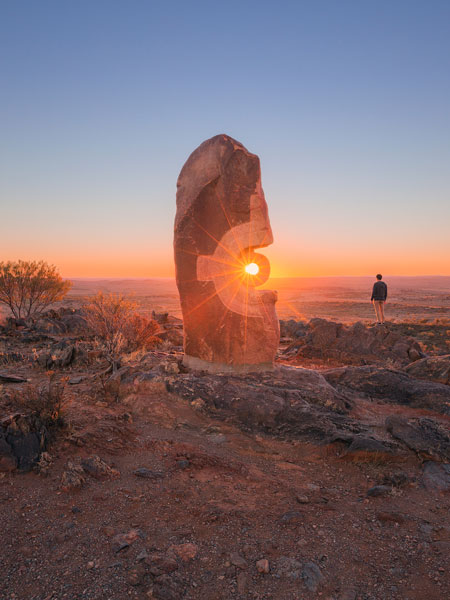
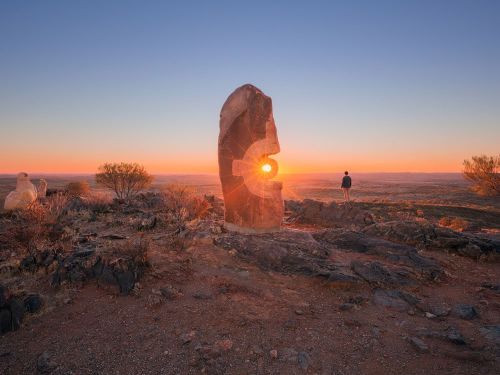
Living Desert and Sculpture
Catch a sunset at Living Desert and Sculptures. (Image: DNSW)

Download our beautifully-illustrated map of NSW’s best road trips (pictured below) or find the giant wall map inside issue 90 of Australian Traveller magazine.
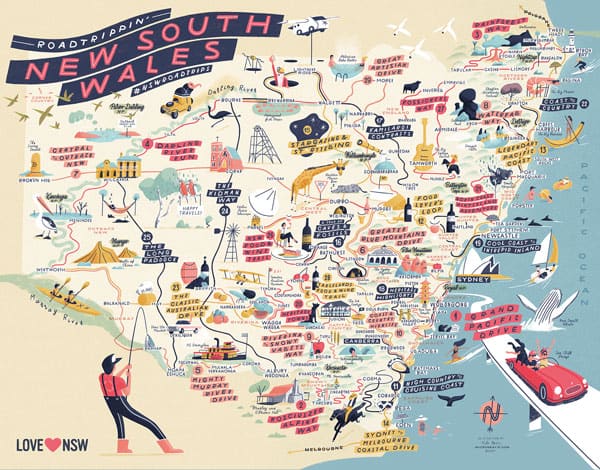
Map of the best road trips in NSW
Illustration: Mike Rossi

Weekly travel news, experiences
insider tips, offers, and more.

Want to see more stories from Australian Traveller in your Google search results?

  1. Click here to set Australian Traveller as a preferred source.
  2. Tick the box next to "Australian Traveller". That's it.
hero media

This surprising regional town is making its mark on the culinary world

(Image: Visit Griffith)

    Carla Grossetti Carla Grossetti
    With more than 60 nationalities calling it home and a century of Italian influence shaping its paddocks and plates, Griffith is a regional Australian town with serious culinary cred.

    It might feel surprising to learn that Griffith is one of Australia’s leading food destinations. In-the-know Italians have understood this for generations, drawn to the Riverina region’s fertile soils that reminded them of the terrain they’d left behind more than a century ago. These days, Griffith supplies much of the nation’s pantry: 95 per cent of Australia’s prunes come from the region, it’s the country’s largest citrus-growing area, and it’s a leading producer of almonds and walnuts. Even the pickles in every McDonald’s burger nationwide are produced in Griffith. This is not just a farming town; the Griffith food scene is leading the way.

    Here, culinary confidence is rooted in migration. Italian families began arriving from 1913, with a second wave settling after the Second World War. Today, Griffith has the highest proportion of Italian ancestry of any Local Government Area in Australia. Add to that more than 60 nationalities represented across the community and you have a town where food is driven not by trends, but by tradition. Griffith’s motto, ‘Taste our culture’, isn’t marketing spin; it’s the reality.

    Where the vines tell a story

    A hand pouring wine into a glass, with a table filled with food.
    Uncover the stories behind every glass. (Image: Destination NSW)

    The Riverina has long been dubbed the food bowl of Australia, but it’s also a wine region that remains largely under the radar. What sets Griffith apart is that every one of its wineries is family-owned, many spanning generations.

    Calabria Family Wines is one of the region’s standard-bearers. The Calabria story began in 1945 when Francesco Calabria planted his first vines; today, the family continues to shape the region’s identity while also stewarding the historic McWilliam’s Wines brand. McWilliam’s was the first winery to plant vines in the area, and its barrel-shaped cellar door – complete with a soaring stained-glass window – remains one of the most distinctive in regional NSW.

    Yarran Wines, run by the Brewer family, showcases estate-grown fruit across Mediterranean varietals that thrive in the warm climate. Expect bold reds and textured whites that reflect both heritage and innovation.

    Set inside the old ambulance station, Harvest HQ is owned and operated by the Riverina Winemakers Association and pours a rotating selection of local wines under one roof. It also features spirits from The Aisling Distillery, reinforcing the region’s collaborative approach to craft.

    At the table

    A flat lay of a steak.
    Dine where tradition meets a bold new generation. (Image: Visit Griffith)

    If the vineyards tell one story, the dining rooms tell another. Griffith’s restaurants are where tradition and next-gen confidence meet.

    Zecca Handmade Italian occupies the former Rural Bank building, an imposing Art Deco landmark from the late 1930s. ‘Zecca’ means money print, and the name is a nod to the Zecca di Venezia in Venice. Here, find the Riverina’s only producer of dried artisan pasta and traditional Italian recipes. Importantly, the growers and producers supplying the kitchen are listed on the menu as a transparent expression of the region’s farm-to-table ethos.

    Established in 1977 and still run by the Vico family, La Scala puts authentic Italian cuisine on centre stage. Expect handmade pasta, traditional wood-fired pizzas, slow-cooked sauces and dishes that follow recipes guarded like family heirlooms. For something more contemporary, Bull & Bell in Gem Hotel is a shrine to the Euro-style steakhouse that works closely with local farmers and artisans to showcase Riverina produce.

    And then there are the institutions. Bertoldo’s Pasticceria, now in its third generation, draws locals daily for cannoli, biscotti, crostoli and house-made gelato, alongside classic sausage rolls and potato pies. La Piccola Grosseria feels like stepping into an Italian alimentari, its shelves lined with continental goods that wouldn’t feel out of place in Puglia.

    Meanwhile, Limone celebrates local and seasonal produce across breakfast and lunch menus, enriched by the produce and stories of Piccolo Family Farm. Find pastries and sourdough baked daily, and pop into the onsite retail pantry for products from regional producers – including the Piccolo family’s own wine range, Caro Piccolo.

    From the source

    A plated Aquna Sustainable Murray Cod dish.
    Taste world-renowned Aquna Sustainable Murray Cod, straight from its source. (Image: Visit Griffith)

    Behind every menu is a producer. Aquna Sustainable Murray Cod is perhaps Griffith’s most high-profile export; the brand’s Murray cod and Aquna Gold Murray Cod Caviar have achieved global recognition. In October 2024, Aquna presented its products to King Charles III and Queen Camilla at the NSW Premier’s Community BBQ in Parramatta. Impressed by the producer’s sustainable farming practices, the King requested the cod be sent to Buckingham Palace – not bad for a fish farm in regional NSW.

    Mandolé Orchard champions almonds grown on a family-run farm, transforming them into almond milk and value-added products. At Morella Grove, olives are pressed into premium olive oil and pantry staples that speak to Griffith’s Mediterranean heart. These producers are not peripheral; they are central to the town’s culinary ecosystem. Learn about local sustainable farming practices during a farm tour.

    Mark your calendar

    A woman walking past a food mural, something you can spot during A Taste of Italy Griffith.
    Plan your visit around A Taste of Italy Griffith. (Image: Visit Griffith)

    For a town that helps stock Australia’s supermarkets, Griffith has remained curiously absent from the national dining conversation. That’s beginning to change. If you’ve been searching for a regional food destination with substance, heritage and a clear sense of identity, you’ll find it here in the Riverina, right under your nose.

    Time your visit to the Riverina region to coincide with A Taste of Italy Griffith, held every August. This week-long celebration of Italian heritage and culture offers a wide range of Italian-inspired events and experiences to enjoy. Expect long-table lunches, wine tasting experiences, cooking classes and a Makers in the Piazza market. The headline event is a ticketed long lunch – Festa delle Salsicce (Salami Festival) – where winners of the best salami are announced.

    Start planning your foodie getaway at visitgriffith.com.au.