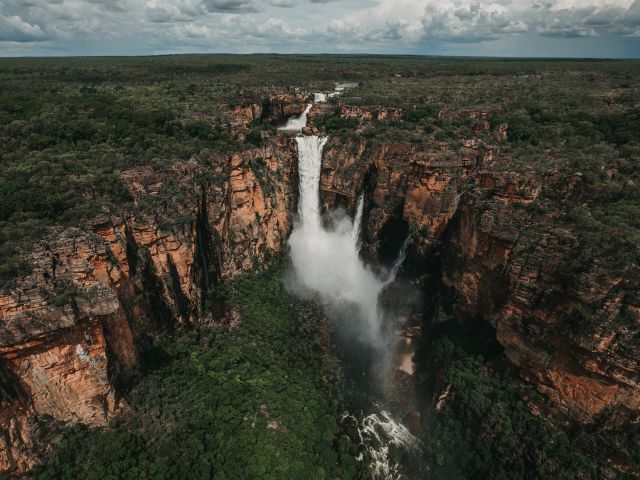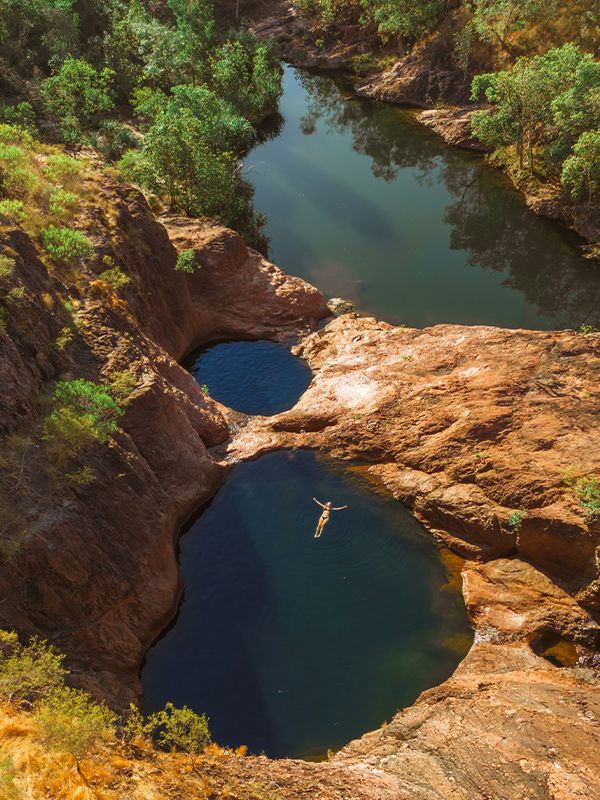
East Arnhem Land’s vast and remarkable wilderness is alive with indigenous culture, where a traditional way of life is thriving. Half the journey is getting there, like an ultimate Australian cultural odyssey, writes Steve Madgwick.
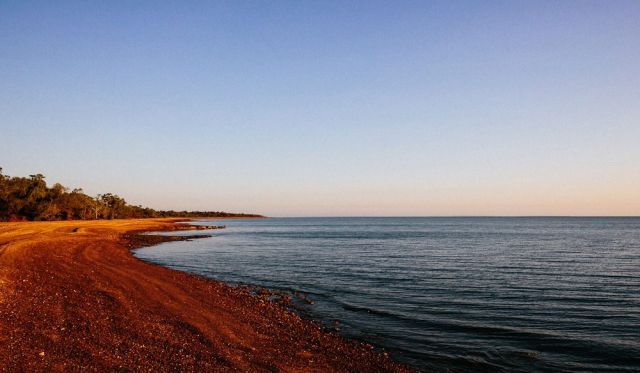
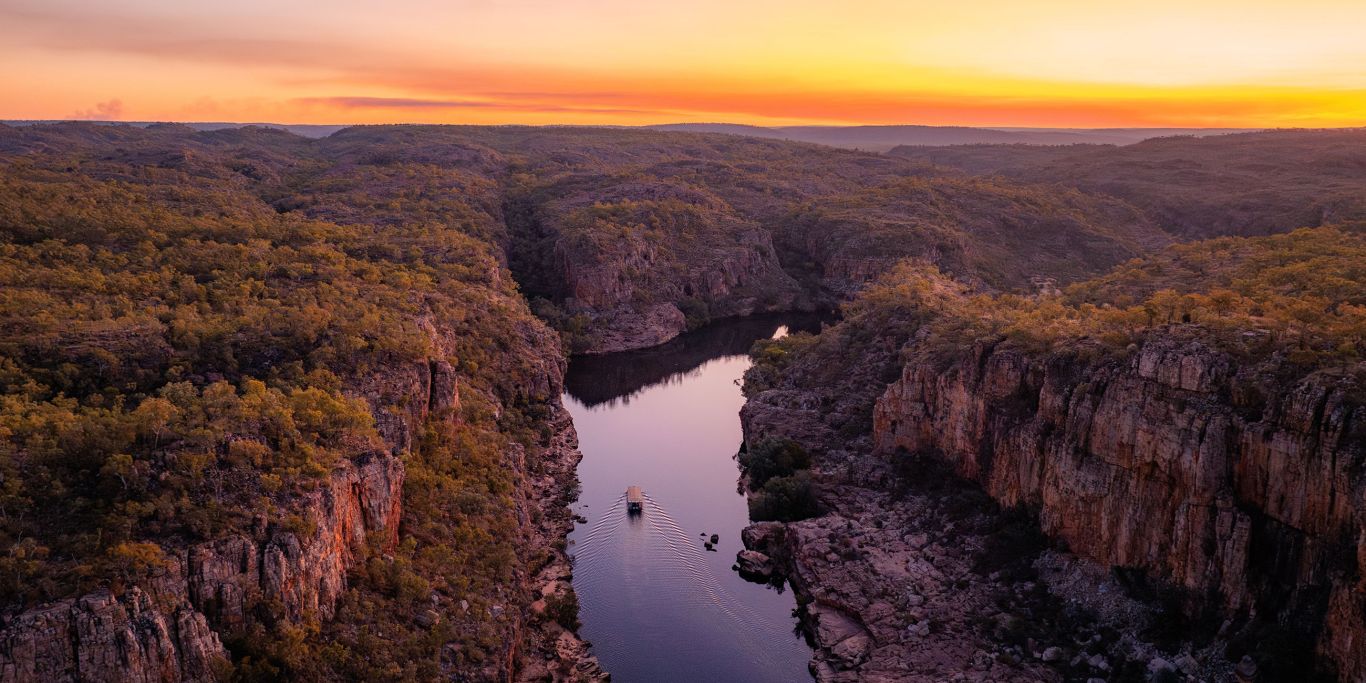
A lonely squiggly line, like a toddler would draw on an Etch A Sketch, is about the only sign of civilisation in East Arnhem Land, at least according to the Land Cruiser’s GPS. But the GPS lies. In its defence though, without the Yolngu people’s local knowledge here, you are effectively wandering blindly around 97,000 square kilometres of inconceivably hued fecund wilderness without a paddle.
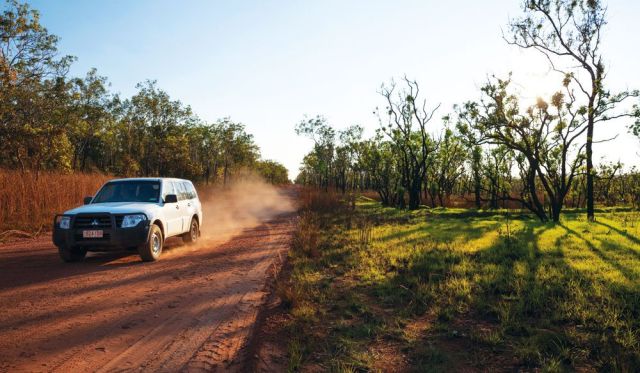
A seven-day road trip adventure
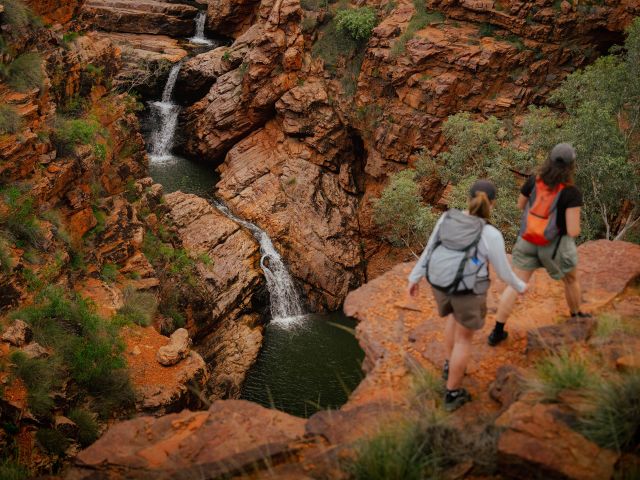
For seven days on Venture North’s debut ‘cultural safari’ through the rarely traversed East Arnhem Land – the Yolngu homeland and heartland – we bump and squeak along quicksand-esque tracks, past nonchalant herds of wild horses, buffaloes and donkeys.
We’re in search of a handful of positively microscopic communities, which even by Northern Territory standards are ridiculously remote. Our guide, Dave McMahon, who has bucket-loads of bush sense beyond his years, navigates.
From Darwin, we head through Katherine, skirt around Kakadu, then throw a massive dingo-leg north-east along the perpetual outback of the Central Arnhem Road.
We’re bound for the de facto capital, Nhulunbuy, the Gulf of Carpentaria’s western gateway on the Gove Peninsula.
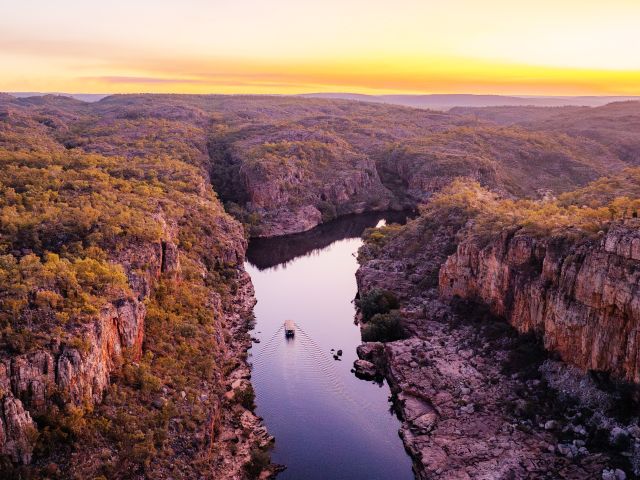
We cross tawny rivers and crystal streams, which would have been idiotic to traverse even in a rubber ducky a few months later in the deluge of the wet season.
Monsoon forests and expansive eucalypt woodlands flicker past, filtered through the tinted glass of our air-conned Cruiser.
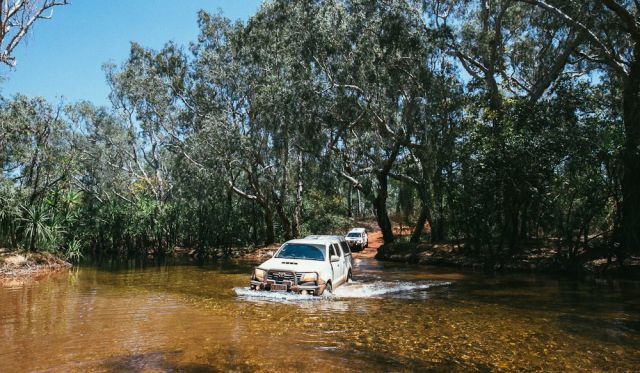
Immeasurable acres of scrub sluggishly smoulder from ‘firestick farming’, the practice of torching the land to revitalise it and make hunting easier when game such as kangaroos move in to feed on the new shoots of grass. It’s a cornerstone of the traditional owners’ ancient conservation and hunting philosophy.
Each Yolngu community is its own ‘country’, as different from each other as they are from Australia’s big cities – with distinct dialects, complex cultures and unique ceremonies – yet inextricably linked to the next by ‘song lines’ that course along the landscape.
The Yolngu will open their doors and multi-millennial knowledge banks to us and in return we will have to open our minds to their ceremonies, dreaming stories, tales of struggle and their often-confronting bush tucker. Here everything is governed by gender, tradition, season and, sometimes it seems, pure whim. Come meet the people of East Arnhem Land.
The art of the pop-up ceremony
“They are watching us now," says Lazarus Murray. He stares dead ahead into the untamed bush, past dusky silhouettes of stocky cathedral-like termite mounds, seemingly at nothing. I can’t see anyone.
“The country speaks to you," he exhales and looks me directly in the eyes. “I’m over the moon we can share this with you."
Lazarus sits in a row of equally proud fathers, brothers and uncles on a woven pandanus mat on the earth of Bagetti Homestead outstation, 30 bouncy kilometres from his house in Bulman, not quite halfway up Central Arnhem Road. The extended Murray family are the traditional owners of all of this.
Lazarus has rallied Bulman’s young dancers, including his son, to narrate his homeland’s story. One by one, bush-bashed white Toyota Troopies pull up; Lazarus hears them coming minutes before I do.
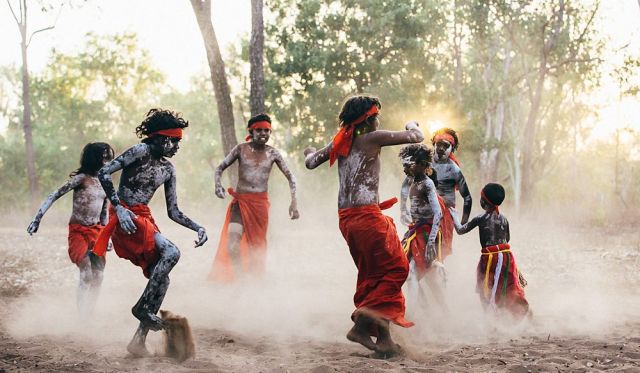
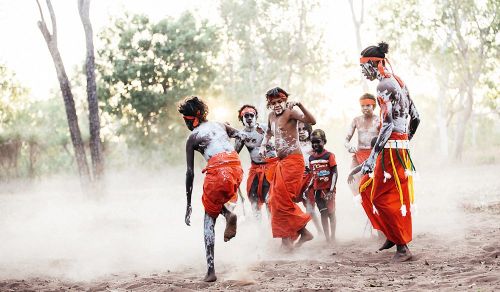
A sandy circle raked clear of twigs and nasties becomes a pop-up bush stage. White clay and scarlet red costumes transform shyly giggling young boys into storytellers; glimpses of footy shorts underneath give an anachronistically modern twist.
Bulman’s daughters will dance today too, but strictly on the periphery of the circle – storytelling in this style is mainly men’s business. Lazarus’s eyes grin as he sharply cracks his clapsticks. A yidaki (didgeridoo) player sets the beat, its end sitting in a rusty tin: a bush subwoofer. The troupe of young storytellers circles slowly, imaginary spears in hand… the pace picks up.
The boys explode with screams when they land the mythical barramundi. Dust hangs ethereally in the dusk light that makes it through the growth. In-jokes and cackling giggles ricochet between the Murrays as each dance begins.
“We teach them this from the day they were born," says Lazarus. Two persistent kids drag me into the circle. I mimic their movements, appallingly. We become a whirlwind, circling around chaotically.
I rejoin Lazarus. Why have this gathering out here, so far from your house I ask? “A Dreaming kangaroo planted a sacred object just across the river there on its journey," he says. “It came from up in the islands and created all the country – rivers, billabongs. It makes this spot sort of like the White House of all the ceremonies in Arnhem Land."
While this ceremony is unique to this country, it is integral with song lines flowing through surrounding homelands. Bulman’s full ceremony is only performed every five years, and the young boys must first be initiated (at around 10), when their father or uncle deems that they are ready to represent the people.
“When anyone sees us with our paint they know we run the area – it’s sort of like our brand. Like Toyota has a brand," he says motioning towards the Troopies. “But way, way more than that!"
The outback megamall
“The old fellas used to wrestle crocodiles to eat," says Lazarus’s sister Cynthia. There is no punchline. It seems just about every plant and animal at Bagetti, except for clan totems, is on the menu – ‘seasonal’ out here is an essential, ancient philosophy.
The extended family relax on a shady finger of land that juts into the Wilton River, perilously close to the ‘sacred’ side of the river – a definite no-go for balanda (white fellas) like me, as I’ve been reminded at least three times.
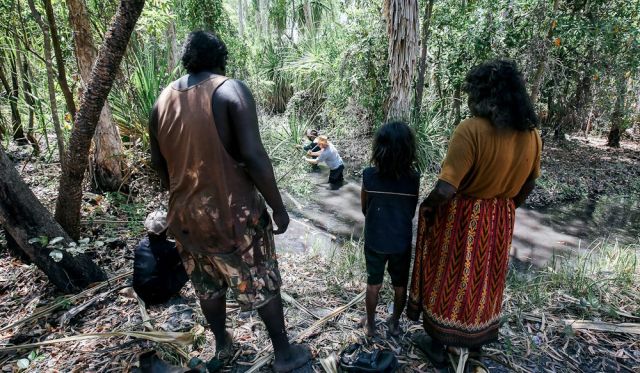
Freshly butchered buffalo ribs hiss on the open grill – last night’s hunting bounty. One of the men catches a watermelon-sized turtle and prepares it unceremoniously on the spot – with a snap of the neck – and plops it straight into the coals.
We spear for mud cod at a nearby natural spring enclosed by fulsome pandanus palms that make it feel otherworldly, closer to a children’s book illustration than reality. The clear water stirs brown under my clumsy footsteps.
I’m knee-deep, four-pronged spear poised in my hand, when Cynthia matter-of-factly mentions that baby freshwater crocs and 1.5-metre (aquatic) file snakes call this paradise home. It’s OK though, she reassures me, as each snake “will feed five or six of us".
Nearby, down by the river, the men fish with spears and hand-lines, keeping a look out for salties which are apparently even higher up the food chain than the river’s bull sharks. Cynthia adroitly collects river mussels with her hands from between rocks in shallow rapids. She repeatedly surfaces with rolled-up T-shirts full; one dish for tonight’s feast sorted.
Cynthia tells me about a less hands-on way to fish: dropping ironwood bark into small ponds, which starves the fish of oxygen, “poisoning them". They then simply return later to collect the catch of the day, which is already floating on the surface.
Protein options abound, from the ubiquitous buffaloes (usually hunted with rifles) to the piquant lime-and-chili-esque taste of raw green ants. The vegetable aisle is stocked to overflowing.
A few metres from our camp Cynthia introduces me to the white apple (great as a preserve), the green plum and the frustratingly small yet succulent bush peanut. Plants that aren’t palatable often stock the bush medicine cabinet instead – everything from bellyache to mozzie bites can be sorted out. And if you’re thirsty, simply tap a bulbous knot on a riverbank paperbark tree, the Yolngu equivalent of the office water cooler.
I reach the limits of my bush-food sampling adventure after a quick bite on a morsel of fresh river turtle (or rubbery river chicken).
Luckily former fine-dining chef Dave cooks up an-over-the-fire gourmet storm (as he does for every meal on Venture North’s trip) that my city palate is more comfortable with. As we drive away heading towards the coast though, I feel like I should proceed to the nearest bush checkout.
Need tips, more detail or itinerary ideas tailored to you? Ask AT.
AI Prompt
Bush verandah to big city gallery
A cyclone would struggle to distract Kathy Wirrpanda. She answers my questions, but her eyes don’t meet mine for long, a mix of cultural etiquette and ‘my-god-I-need-to-finish-this’ focus.
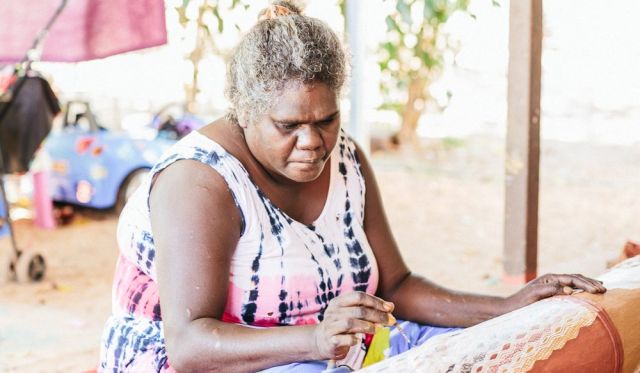
Kathy sits cross-legged on the ground in her ‘studio’ – the verandah shade of her house in Baniyala – a handful of pre-rolled roll-your-owns within easy grasp. She applies white, mustard and rusty coloured local ochres to a termite-hollowed stringybark trunk with an ultra-fine brush, made from her daughter’s hair.
She glides millimetre-perfect, cross-hatch lines onto what is traditionally a ceremonial burial pole, over the top of totemic animal carvings.
“It might just look like patterns, but we can read it," she says. “I will finish tomorrow maybe, maybe later. When I do, maybe then I will rest." Kathy is a renowned painter, but despite all of her efforts over the past few days, she will not be credited as the main artist on this work.
Her husband, community elder Djambawa Marawili AM, who carved the pole’s animals, will get the crocodile’s share of the accolades.
A few days later, I serendipitously bump into Kathy at Buku-Larrnggay Mulka Art Centre at Yirrkala, many kilometres away. Family members struggle under the weight of the pole, while a visibly more relaxed Kathy directs, everyone’s eyes darting between her grin and the enchanting work of art.
This not-for-profit gallery has already agreed to buy the pole, as it does most of the community’s pieces, but there is no worry about Kathy’s masterpiece collecting dust on its shelves. It is destined for a place far, far away, in a big city on the east coast.
Country is where the heart is
A rollicking tune from local bush band Garrangali beckons Baniyala’s school kids back from lunch via a PA. Most of this community’s low-lying homes are within a cooee of the modern school, but there are few children in town today. Funeral business up country, apparently.
Brendan Marika, Garrangali’s keyboardist, walks us around his adopted Blue Mud Bay homeland, the place where the saltwater crocodile, referred to as ‘Baru’, first came ashore in creation stories.
This ‘dry’ settlement is a product of the Homelands movement, when indigenous people moved back onto ‘country’ in the 1970s, away from dysfunctional towns and missions, the alcohol and cross-cultural disputes.
In doing so they revived many of the old ways. “In towns there are a lot of temptations," says Brendan. “Out here there’s more freedom, and a much stronger culture – it’s better to bring up kids."
We shelter from the dry-season sun under a noble tamarind tree, planted by the great, great, great grandfather of elder Djambawa (Brendan’s father-in-law). It is evidence, he says, of the clan’s trading with the Macassans, Indonesian seafarers who long ago traded commodities like knives and tobacco for spears and labour on their trips to stock up on precious trepang (sea cucumbers).
Brendan proudly takes us to a giant stingray sculpted out of the sandy rock nearby; a surrounding fence hints at its importance. He is tasked with its protection, one of his roles as IPA (Indigenous Protected Area) Ranger, but he gladly unlocks the gate and walks us around the compound.
He tosses sand into the air, vibrates his lips, like blowing an ancient Yolngu raspberry, and chants the names of places where he wants abundant stingrays. How does Brendan feel about balanda like me walking over this sacred place? “This land is who we are as Yolngu, that’s for sure, but this is all about sharing knowledge, culture – and bridging the gap in the 21st century!"

Sleeping under the Morning Star at Bukudal
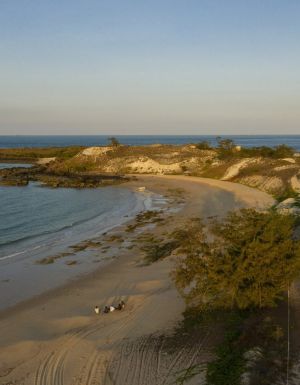
Young Tony Mununggurr expertly etches the shape of a turtle into the hard sand with a stingray barb he’s found by some huge marble-like rocks at the end of Bukadal’s main beach.
He draws 26 eggs underneath and counts them out loud with gusto. Tony loves to devour turtle eggs – everyone here does. Consuming these animals may be seen as controversial, but it’s an important cultural practice.
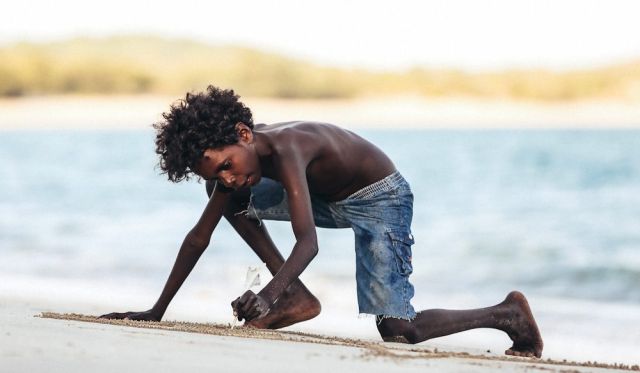
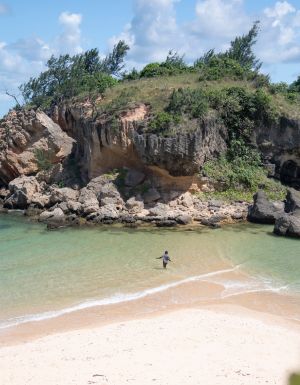
Not even a teen yet, he has already absorbed lifetimes of culture about his homeland, Bukadal, a remote soul-cleansingly picturesque settlement on Caledon Bay. It’s not a place you happen upon by accident, but one you dream of. It’s a challenging drive through hungry sand from the main road; the Mununggurr family has to drag us out of one particularly treacherous part.
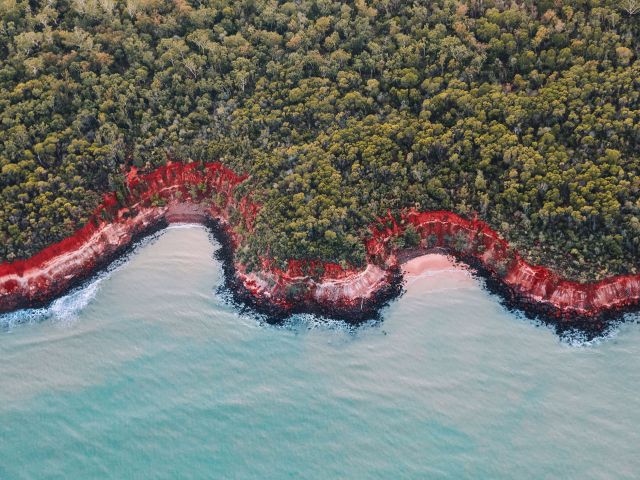
Tony points out a couple of ‘croc slides’ (the only reason I’m not swimming right now to cool off) on our impromptu beach walk.
We rejoin generations of traditional owners, the Mununggurrs, as beach campfire replaces daylight in the ‘Land of the Morning Star’. Elder
Kevin Mununggurr performs an uncomplicated ‘Welcome to Country’ and then I set up my swag in the dunes near the Knowledge Tree, central to the Djapu people’s narrative. There’s zero chance of rain tonight, it’s the ‘mini-dry’ season – Yolngu believe there are between six and eight seasons in Arnhem Land, not just the usual wet-dry dichotomy.
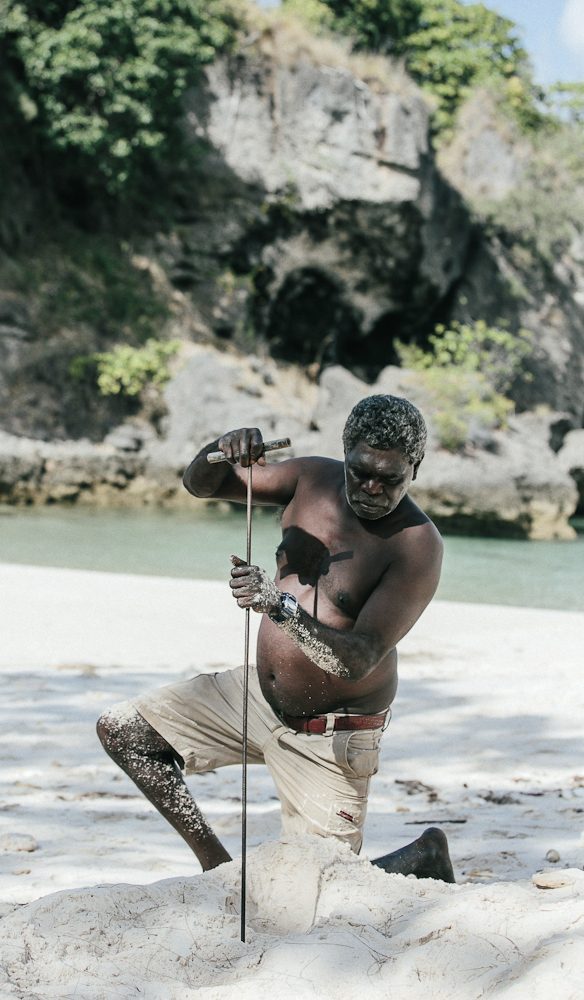
The charismatic Sean Mununggurr leads the fireside conversation, telling stories with theatrical aplomb. Unsurprisingly, he sometimes goes ‘off country’ to do some acting.
Sean recounts stories of his ‘bad boy’ life, when the temptations of towns far away saw him stray, before he followed the way of his ancestors.
He played a troubled teen in the 2001 film Yolngu Boy – life imitating art. “Me and Kevin are living here on this land in our father’s footsteps," he says. “The knowledge has been passed on to us – so now it stays forever."
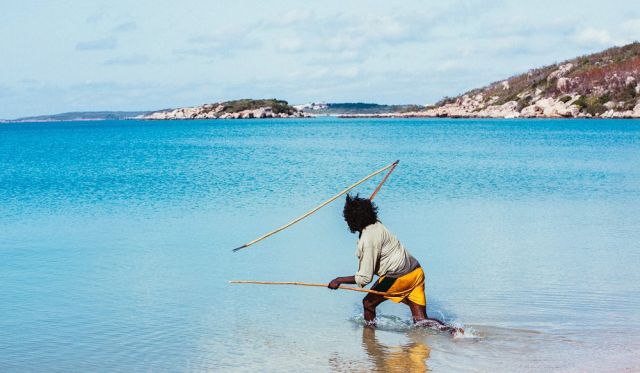
Watching him spear fish along the beach you’d swear he has spent his whole life in Bukadal; the crouched intuitive stance when he’s about to launch the spear, the way he sprints after a school of barra, his wild whoops after he makes a catch.
The calm conversation slowly drifts into the bay breeze before it whistles through casuarina trees. The Morning Star and the full moon shine like stadium lights; it’s almost too bright to sleep.
Two indistinct birds ping back and forth just above the sound of waves rolling onto shore. I’ve seen evidence of wild buffaloes, snakes and crocodiles out there in the darkness, but I feel safe in our camp for the night, watched over by more generations of my hosts than just those I can see in the firelight.
Weekly travel news, experiences
insider tips, offers, and more.
East Arnhem Land details
How we did it:
Venture North’s ‘A Journey Through East Arnhem Land’ is a new seven-day luxury 4WD trip from Darwin to Nhulunbuy through a selection of communities including Bulman, Baniyala, Bukudal and Bawaka.
Be aware that the itinerary can change dramatically due to cultural reasons, a funeral for instance, at a moment’s notice.
The fully catered journey (up to six people) focuses on cultural experiences, including hunting, food and art. Forget about hotels out here (all the stars are in the outback sky); accommodation is in netted swags and basic dorms. Prices start at $5990 per person (based on a minimum of four passengers).
Drive yourself
East Arnhem Land is not an easy place to drive through for independent travellers, but well worth the effort. You will have to pre-arrange permits to transit and to visit each community.
If you plan to leave the main road, you will also need to have a well-equipped 4WD and be able to get yourself out of trouble (sand bogs and river crossings).
For more on permits, see Nhulunbuy-based Lirrwi Tourism, which also offers a mix of cultural experiences ranging from homeland adventures to art tours.
When to go
Dry season from May to October is the ideal time to go.
While it is possible to visit some places in the Wet (November to April), it’s a completely different experience – many roads are impassable due to flooding.
Want to see more stories from Australian Traveller in your Google search results?
- Click here to set Australian Traveller as a preferred source.
- Tick the box next to "Australian Traveller". That's it.

Steve Madgwick
View profile and articles