Shack up in a lighthouse keeper’s cottage, holiday home with a twist or design-led motel that captures the nostalgia of your own childhood and create new memories.
Here are the six family-friendly stays that made it into positions 59 to 65 of our coveted list of 100 unique stays. Head here to read the full list and start planning your next escape.
59. Dovecote, Gerringong, NSW
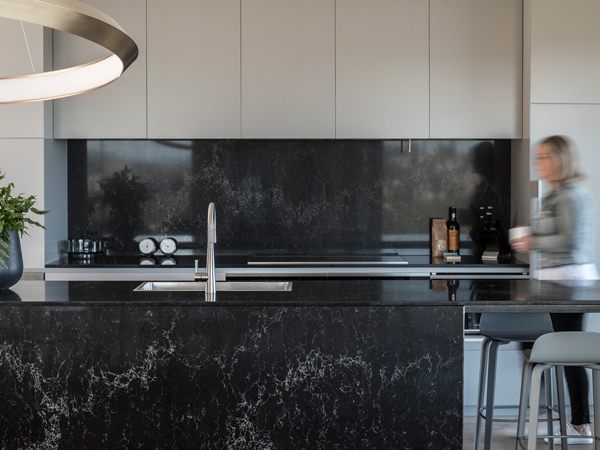
While the dark good looks of Dovecote have made it a favourite with design enthusiasts, its practical appeals tick the box with doting parents (who are also design enthusiasts), extended families, and the family you choose too. The contemporary farmhouse, perched on 60 hectares of oceanfront farmland in the Kiama area of the NSW South Coast, caters to all comers – and it does it in serious style.
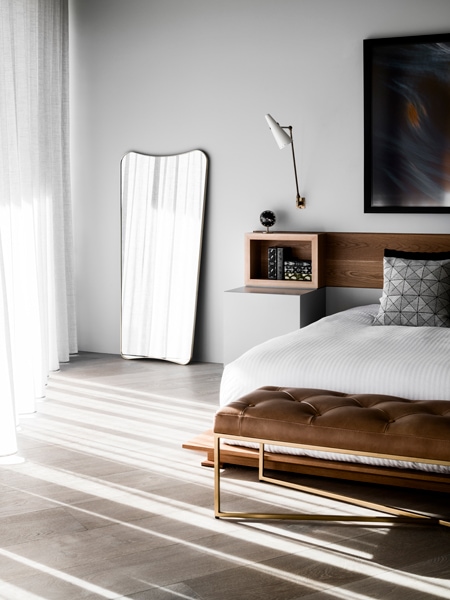
The metal spine of the four-bedroom, four-bathroom main house rises up and reaches out over the land with extruded fingers clad in standing seam black aluminium cladding that principal architect Andy Carson, of Atelier Andy Carson, found “so remarkable we imported it from Germany". Andy says Dovecote is highly attuned to the user experience and framing very specific views. “One of the principles we employed was that the form should react to and respond directly to its surrounds and every inch of the design is in response to the immediate and greater landscape. The building twists and morphs toward specific views, forging a greater connection with the landscape, which is in constant change with waves, tides, whales, dolphins and passing ships all asserting themselves," he says. “The owners had a very clear vision of what they wanted Dovecote to be and then let me respond to it in terms of how to react to the site, the need for wind protection and balancing privacy while capitalising on those expansive views," he says.
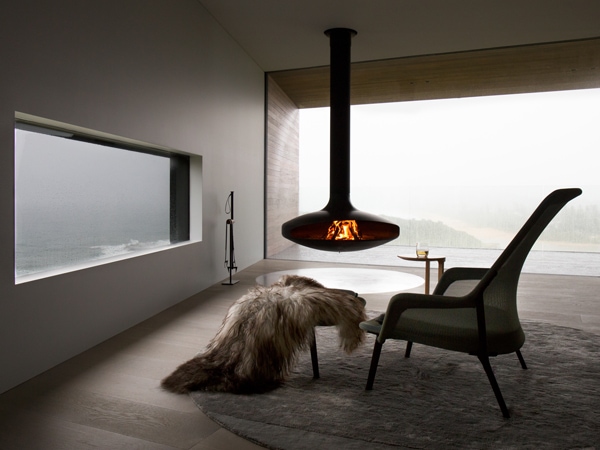
The strong horizontal look of the holiday home, which had a cameo in the 2020 horror film The Invisible Man – a thrilling proposition for teens no doubt, is both modern and dramatic and has, according to Andy, “an otherworldly feel" and “life of its own". In addition to The Headland by Dovecote, which sleeps six adults and two children, the property includes The Range by Dovecote, which features two bedrooms and a cosy living area. Inside, the contemporary minimalist cocoon is cosy enough to curl up alone with a good book, and large enough to accommodate a nuclear family, and features furnishings and finishes that prevent some visitors from stepping beyond the front door.
Those who do want to explore the local area are in good hands as manager and host Kathryn Durham (known as Katie to returning guests) says there’s a lot to do right on the doorstep of Dovecote. Although she sends guests off to enjoy “horse riding, fishing, surfing, picnics, bushwalks, and great dining-out options in Gerringong, Kiama and Berry" she advises them not to book too much off site. The reason is simple: “We go above and beyond to make them feel spoilt."
60. Lighthouse Keeper’s & Heritage Cottages, Rottnest Island, WA
Rottnest Island (Wadjemup) is arguably the most locally adored place in Western Australia. Yet the affection is not for selfie-posing quokkas, crystalline bays mimicking blue-green opals and white, sunglasses-essential sands. Rotto, as it’s lovingly addressed, is a haven of childhood joys, which locals – me, included – endeavour to repeat with their own offspring, year after year. Multiple families book out rows of cottages, eager for their children to experience true freedom. Kids can safely roam on pushbikes on the car-free isle, exploring at will, and that means everything to parents.
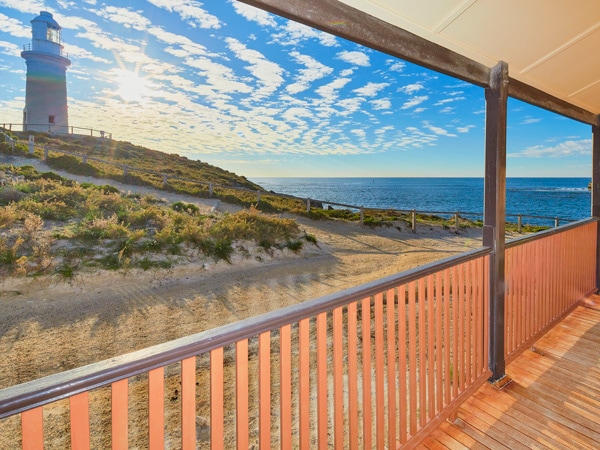
One of the island’s most coveted accommodations is the historic stone Lighthouse Keeper’s cottage. Fitting 10 people, it allows friends or extended families to bunk in together at one of the only spots devoid of neighbouring properties, other than Bathurst Lighthouse itself (commissioned in 1900). Despite simple interiors, a wraparound verandah, doors flung open to embrace the breeze and windows glimpsing dazzling views make it feel like a wealthy seaside manor. Everyone feels privileged to be there, without worrying about sandy toes.
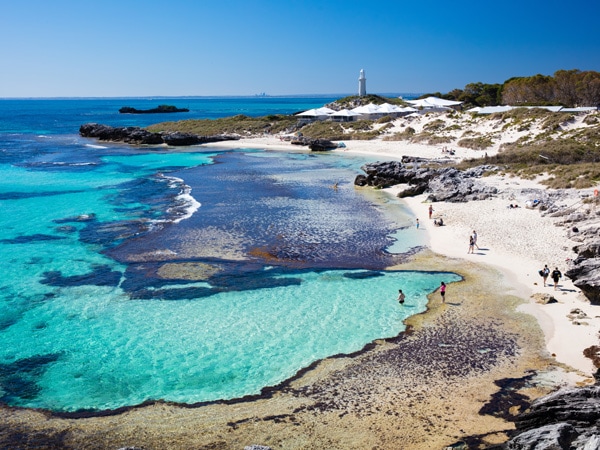
If you can’t get a booking – and trust me, it takes perseverance – then the motley crew of heritage cottages strung along Vincent Way, in the heart of Thomson Bay settlement, combine historic bones with a convenient location (all bookable via rottnestisland.com). The colonial cottages have been in continuous use as accommodation since the 1840s, on what’s claimed to be the oldest intact streetscape in Australia. Prison guards, wardens and pilots were the first inhabitants. The downside of this utilitarian past is the cottages are spartan and don’t always leverage the ocean outlook. Windows were sent from London; many are small and sparingly used, and no two are the same – there’s character in spades. It draws the kids and me out to the balcony for horizon gazing and quokka spotting. Who wants to stay inside, anyway? – Fleur Bainger
Need tips, more detail or itinerary ideas tailored to you? Ask AT.
AI Prompt
61. Sunset 4 Fraser Island House, K’gari (Fraser Island), Qld
Where can you take a family of four plus mother-in-law (aka the super granny) and her recently widowed friend on a week-long sojourn? I do love a challenge. The specifications are pretty narrow. First, it has to be a suitable reward (read luxurious) for the tireless super granny who has taken on more than her fair share of child-minding duties. Second, my golden rule of multi-generational holidays is everyone has to have a door they can close… and a load of space. Finally, it needs to have enough action for the kids and enough secluded peace and tranquillity for an exhausted mother, granny and gently grieving widow.
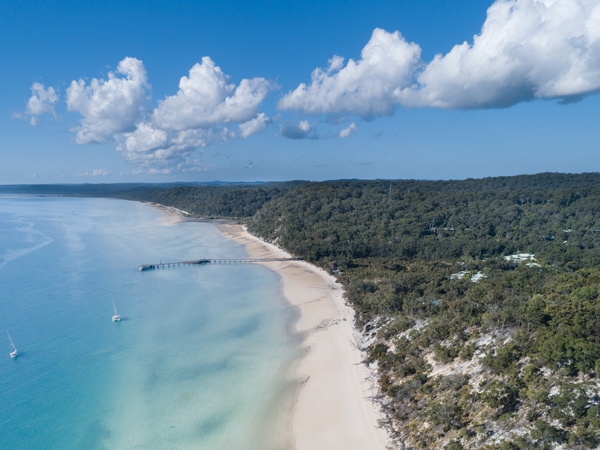
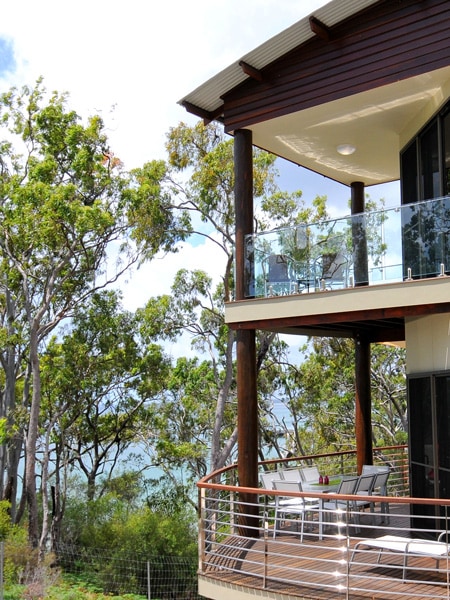
And we have a winner. Sunset 4 holiday home on the southern edge of Kingfisher Bay Resort, K’Gari (Fraser Island). The three bedrooms are across three levels, well away from each other. The kids’ wafts of giddy excitement as they play with Granny never reach our top-floor room with a private balcony. In fact everyone has a private balcony. And an en suite. The fully stocked kitchen enables home catering, which puts children in bed at an appropriate time. And to celebrate a sixth birthday we enlist the resort staff to stage a magnificent barbecue feast in the bush. This gold-star parenting moment was an added bonus.
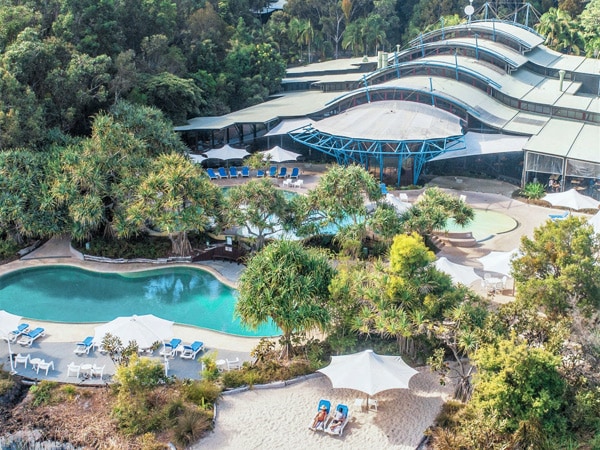
The heart of the modern light-filled house is the sunken lounge-dining and rumpus room that leads to a huge verandah. Every afternoon we congregate with a glass of bubbles, ‘ohhh’ and ‘ahhh’ as the sun sets across the Great Sandy Strait and recount the day’s adventures: bouncing through the sandy 4WD tracks, swimming at the magnificent lakes, spying whales on scenic flights or just lying by the resort pool with a book. Sunset 4 is the best of both worlds: a luxury holiday home with access to all the benefits of the resort and adventures of Fraser Island. No wonder it was the home for Harry and Meghan on their brief trip in 2018. – Quentin Long
62. Hillcrest Merimbula, NSW
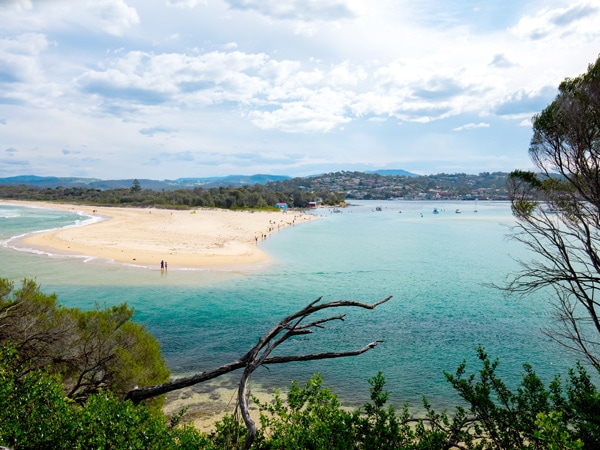
The seventies was the era that gave us shagpile carpets and shag haircuts, ponchos and Pink Floyd. It also gifted us the roadside motel. And while some of the trends from that decade have been rightfully relegated to the scrapheap, others, like this stylised form of accommodation, have come roaring back in all their retro glory. Hillcrest Merimbula, which was completed in 1969, weaves the best of the ’60s and ’70s through the bones of the mid-century building and lets the era shine on. And that was owner Caspar Tresidder’s intent. In fact, Caspar’s brief to Sydney-based interior designer Félicie Chardon, of Atelier Chardon Architecture, was for the two-storey motel, which is located at the top of Merimbula Drive facing seaward, to have the feel of lighthouse.
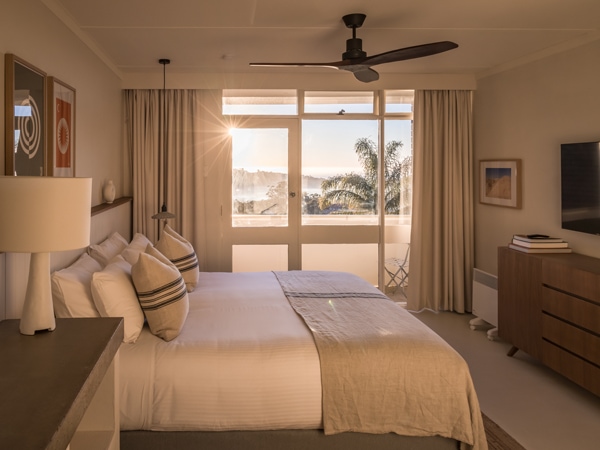
By reconfiguring all the rooms to face the view, the Hillcrest takes advantage of its lofty position; I felt like an actual lighthouse keeper while standing on my balcony looking out past Short Point, over Lake Merimbula and onto Bar Beach. Luckily, I didn’t have to guide any ships to shore. The bedside tables in my Exhale rooms contained binoculars (not a bible) and I even managed to zoom in on the whales passing by, which added to the romance of my stay.
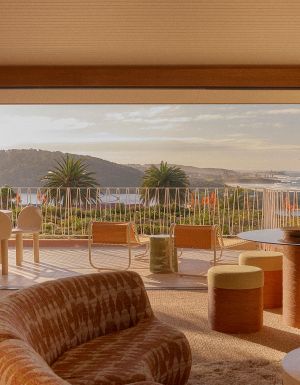
What I loved about the Hillcrest Merimbula – apart from its no-plastics policy – is that it kept the right quotient of kitsch, taking its cues from the period and softening the once brown-brick facade with soothing earthy tones, delicate linens, concrete tables and feature mirrors. There are also design flourishes that are like a wink back to the ’70s, such as the Aztec archways and original wood panelling and pops of muted pinks and reds inspired by the sandstone and mudstone on Merimbula Beach. The motel, once shabby, is now chic. And even the act of pulling up outside the door of my room in the Merimbula motel left me with a sentimental affection for the roadside lodgings of my childhood.
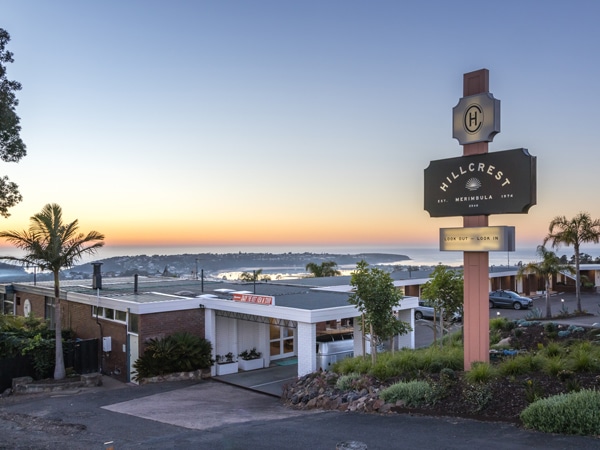
Determined to make the most of a stay, I spent a transcendent few hours sitting on my balcony, sipping a cup of Mayde Tea and breathing in the salty air. All up, there’s one family room and six inter-connecting rooms at the motel, which has 29 rooms and one one-bedroom apartment and has plans to open a casual restaurant and pool bar in November 2021. In Merimbula, outdoor adventure reigns. And while I was too busy visiting an actual lighthouse to use the tennis court, fire pit, or pool bar, I made a mental note to return with my husband and two sons who would totally approve of the motel and the fact many of Merimbula’s top surf spots are mere minutes away. – Carla Grossetti
Weekly travel news, experiences
insider tips, offers, and more.
63. Bawaka Homeland, East Arnhem Land, NT
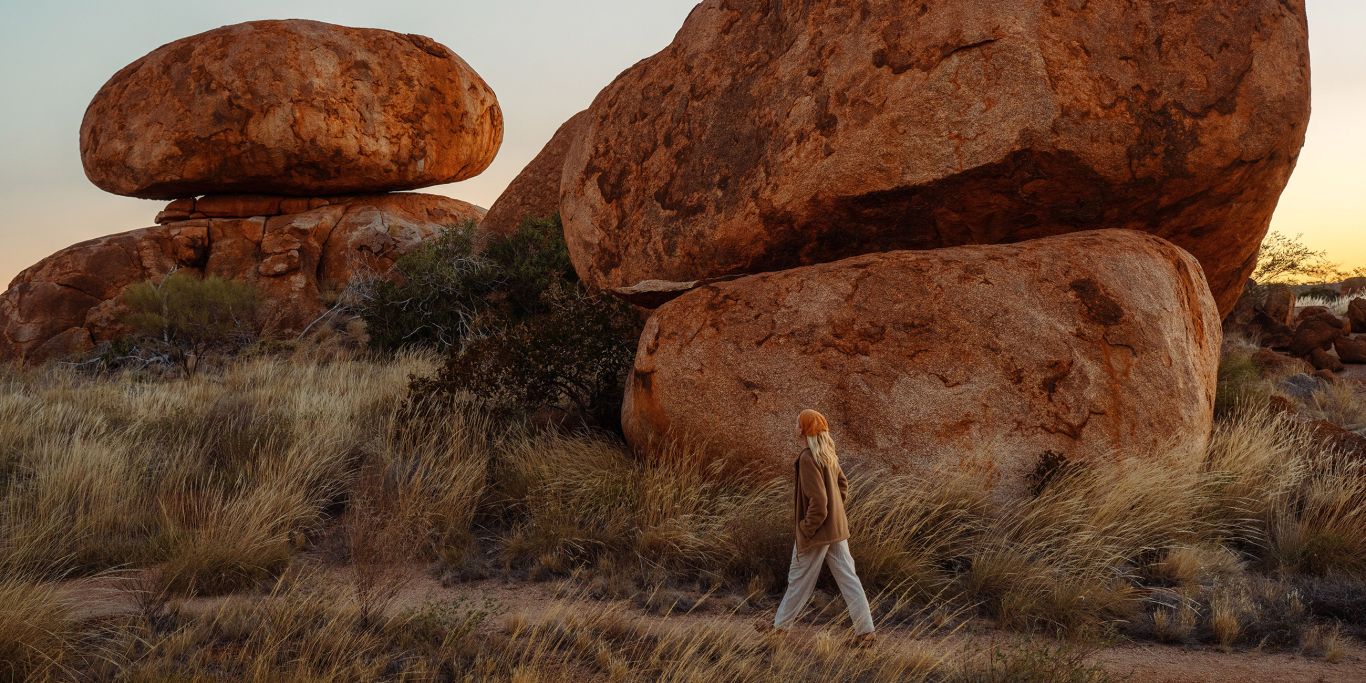
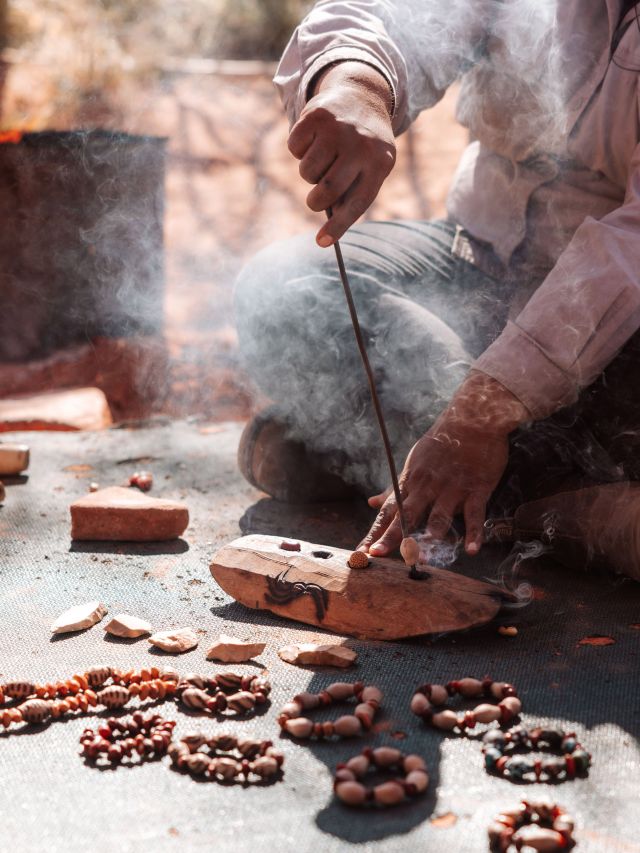
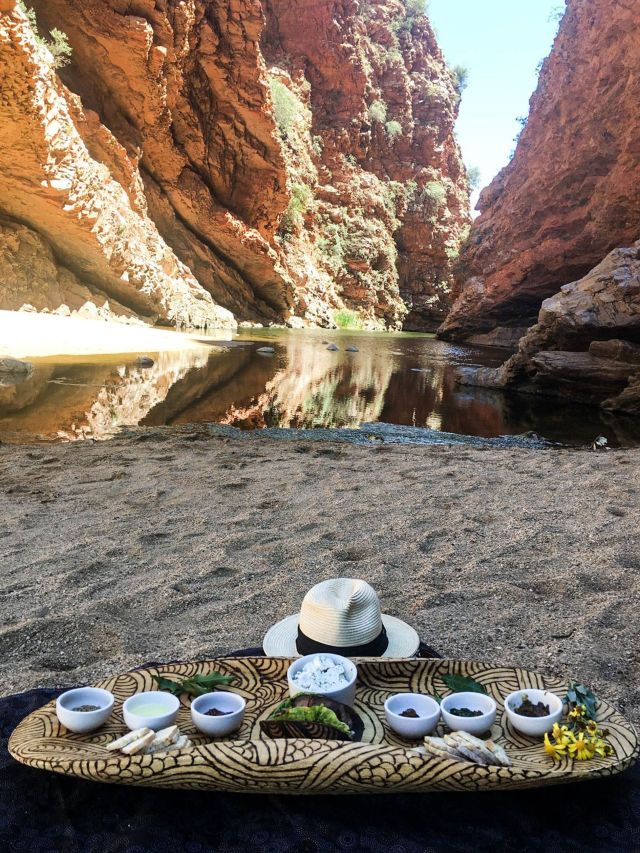
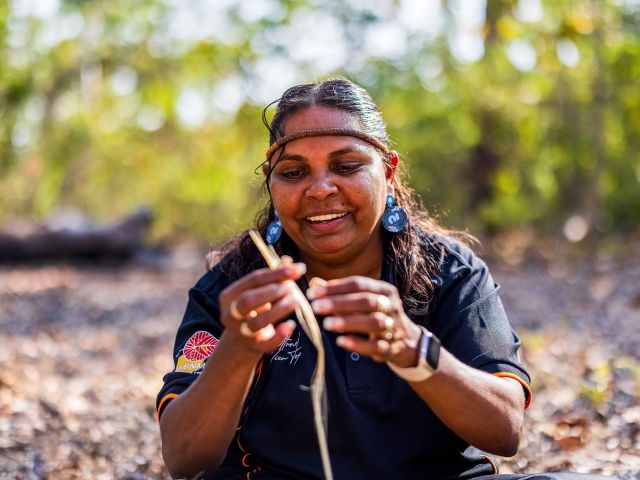
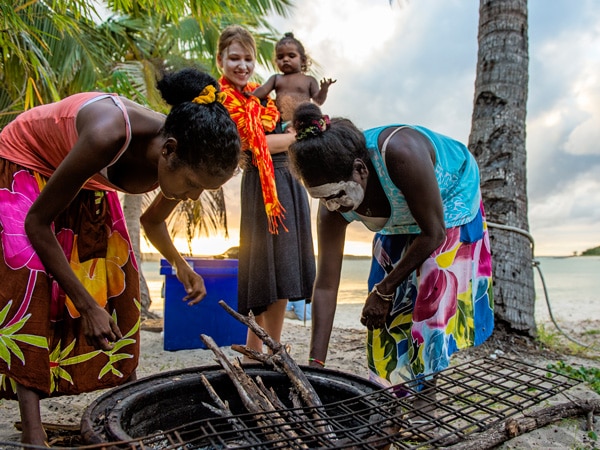
A few days and nights staying on Country in Arnhem Land can teach your children more about Indigenous culture than they will learn in their entire school life. Lirrwi Tourism’s family-friendly Crossing Country tour and Gay’wu women’s tour – a superb mum-daughter adventure – give you quality time with Yolngu families on their traditional homelands such as Bawaka (home to resident crocodile ‘Nike’). On one of the most isolated and stunning coastlines in Australia, you can bond with several generations of these families, whose links to both the natural world and ancient culture are unshakable. Gather turtle eggs and bushfoods, and give the Yolngu language and ancient dances a try. The digs are basic but the connection to people and place is life-affirming. Crucially, your adventure helps sustain these remote cultural outposts. – Steve Madgwick
64. Port Stephens Koala Sanctuary, NSW
The popularity of glamping continues to grow as holidaymakers trade up from traditional camping thanks to the allure of triple-digit thread counts, coffee makers and outdoor hot tubs. But the inclusions at the glamping tents at Port Stephens Koala Sanctuary are completely extra: koalas! The working wildlife sanctuary, located in bushland on the edge of One Mile Beach and Worimi Conservation Lands’ sand dunes on the NSW North Coast, is home to a fully equipped animal hospital, a collection of impossibly cute marsupials and now a clutch of generously appointed four-star canvas safari tents. Check in takes place at the reception/front office, and then it’s a short stroll (or a quick golf cart trip) to my Deluxe Glamping tent.
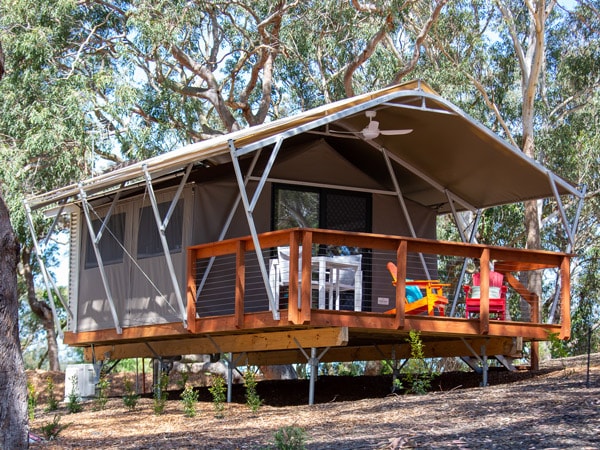
The wide covered deck looks out towards the Newcastle Airport SKYwalk and viewing platform (more on that later), while inside the layout is generous and well appointed: king bed, en suite bathroom, Smart TV and a kitchenette with inclusive snacks, drinks and the fixings for breakfast. As the day draws to a close, silence descends and the darkness is absolute. Cosied up in bed I listen out for the koala chatter one of the staff said I might hear during the night, but sleep takes over.
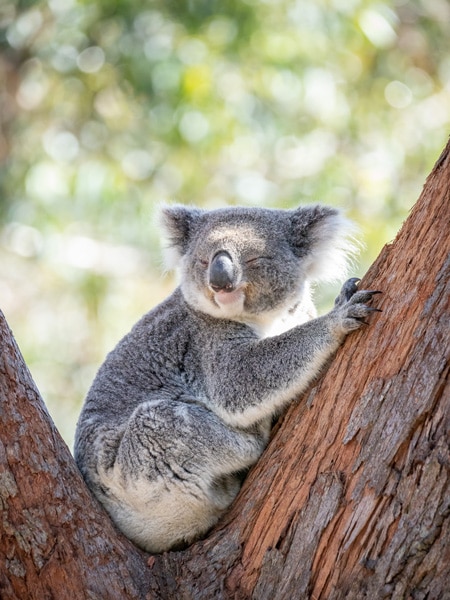
I wake early for the real drawcard of glamping here: exclusive access to the early morning breakfast rituals of the resident koalas, who are too sick or injured to be returned to the wild. It’s only a short stroll to the SKYwalk, a 225-metre elevated pathway, to watch along with my guide as each of the resident koalas receive their breakfast (leaves are brought in from the areas the koalas previously inhabited) and medical treatments from a band of dedicated volunteers and staff. I linger on the treetops viewing platform before heading back to my tent for breakfast. Reluctant to leave the memory of my fluffy neighbours behind, I do indeed exit through the gift store (in this case the Fat Possum Cafe) to take home a cuddly (stuffed) koala of my own. – Leigh-Ann Pow
*Australian Traveller is the proud sponsor of two of the Koala Sanctuary’s residents, Clarence and SES Maree; see how you can help at portstephenskoalas.com.au
65. Jamala Wildlife Lodge, Canberra, ACT
Luxury lodge experiences are often associated with loved-up couples and joint spa treatments, but in the case of Jamala Wildlife Lodge, located at the edge of Canberra, adjacent to the National Zoo & Aquarium, fine dining and five-star appointments come with some seriously family-friendly inclusions. The rooms here – spread across Jungle Bungalows, Giraffe Treehouses and the central uShaka Lodge – allow privileged access to the inhabitants of the zoo, from tigers to giraffes to monkeys; in my case its Malayan sun bears.
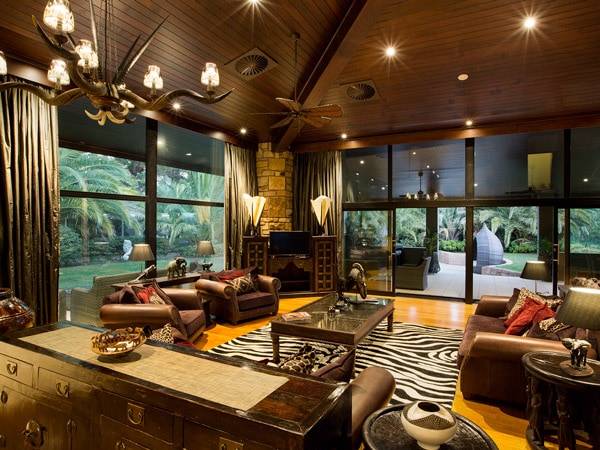
Arriving into the room, which is decorated in safari chic, with lots of dark wood and animal prints, my daughter makes a beeline for the picture window, where one of our furry neighbours for the night sits working its way into a coconut by way of some seriously long claws; our night is spent listening to a symphony of animal calls. In the morning, a pre-breakfast tour takes us through the zoo, with keepers detailing the valuable work done here undertaking breeding programs to bolster numbers of critically endangered species. As a mum, I will take my child making eye contact with wild animals and learning about conservation over a foot massage any day. – Leigh-Ann Pow
Want to see more stories from Australian Traveller in your Google search results?
- Click here to set Australian Traveller as a preferred source.
- Tick the box next to "Australian Traveller". That's it.

Australian Traveller
View profile and articles