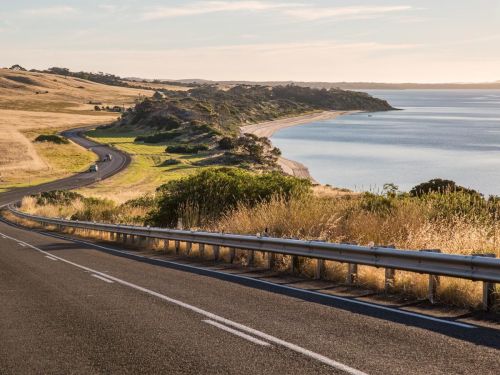
A feel-good road trip itinerary for South Australia

hero media
What’s better than a road trip that crisscrosses beautiful wineries, incredible eateries and stunning scenery? Well, one that does as much good for your soul as it does the communities you traverse.

Plan a road trip through South Australia, taking in Adelaide, some incredible wine regions, and an island escape, and leaving behind a boost to local economies by throwing a case of your favourite vintage in the boot and grabbing supplies from local businesses on the road.

Day one: Arrive in Adelaide

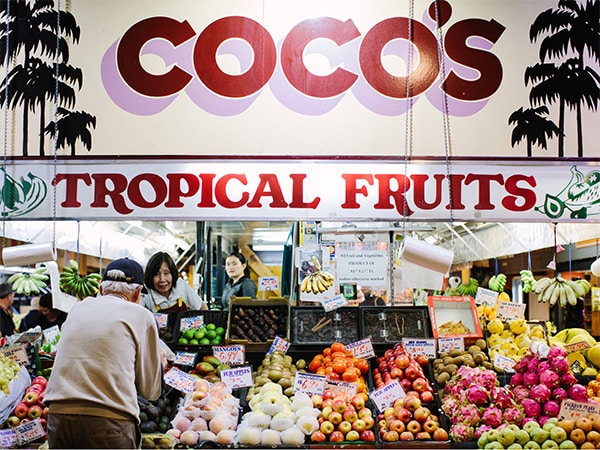
Adelaide is nourished by the ample food bowls all set within a stone’s throw of the city limits. Naturally, this makes her a food-lovers paradise. From the amazing Adelaide Central Market to the internationally lauded restaurants, it’s tough to find a terrible meal in Adelaide. You’re here to pick up your rental car, assuming you’ve flown in from elsewhere, but you really ought to spend some quality (meal)time before you head for the highway.
Adelaidecentralmarket
Adelaide Central Market has everything from karkalla kimchi to espresso-rubbed Italian cheese.

Hot tip: While excellent eateries are prolific in the city, when you’re short on time, direct your Uber to Peel and Leigh streets, where you’ll find lively pubs, bars and cafes brimming with brio any day of the week.            

Stay: There is a great accommodation in Adelaide to suit every budget. Our tip? Stay close to the action at The Mayfair.
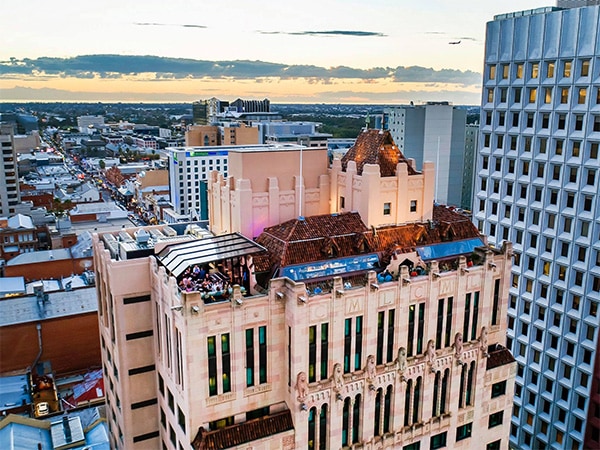
Rooftop drinks at The Mayfair Hotel.

Day two: Adelaide to the Adelaide Hills (45 minutes)

Set off early to make the most of your time in the Hills. The drive is short enough to grab your first coffee on the go and arrive ready for your second at FRED Eatery in Aldgate. Fortified, it’s time to designate a driver and set course for some cellar doors. Propagate your list of wineries as you see fit, but some worthy inclusions are always Unico Zelo, Shaw + Smith, and Pike & Joyce.
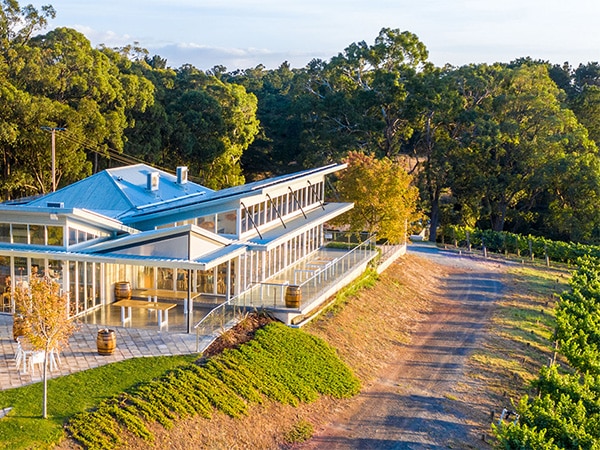
Add Pike & Joyce to your list of wineries

Hot tip: For a taste of the Bavarian, roll onto Hahndorf in time for lunch and roam the Lutheran-founded town where you can find delightfully kitsch German-ness and, if you’re organised enough, an incredible lunch at The Bridgewater Mill.

Stay: If you’re hankering for a luxe escape, book Sequoia at Mount Lofty House. For more humble digs, try a tiny house experience with Cabn.
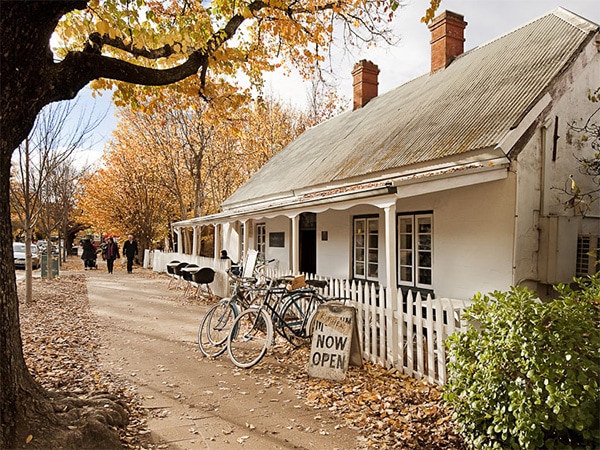
Hahndorf is Australia’s oldest surviving German settlement

Need tips, more detail or itinerary ideas tailored to you? Ask AT.

AI Prompt

Day three: Adelaide Hills to Barossa Valley (50 minutes)

This world-renowned wine region is flush with 80 cellar doors from the big hitters such as Wolf Blass, Henschke Cellars and Jacob’s Creek to smaller producers where treasures await the curious. Naturally, with such fine vines, good food is inevitable, so you’ll find some exceptional dining here, too.

Hot tip: Before you set off tomorrow, you have time for one last Barossa highlight – if you’re open to a pre-dawn start to the day, that is. Barossa Valley Ballooning ascends into the sky above the valley for an exquisite perspective of this stunning region.
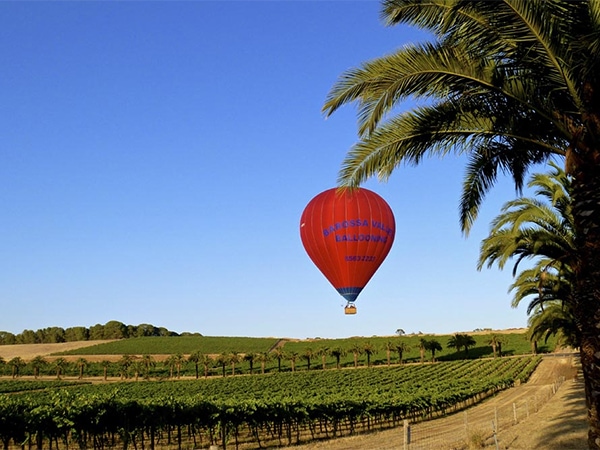
Sky high in the Barossa

Stay: A good option for families and groups, or if you decide to stay on for an extra day, is the contemporary but affordable Barossa Valley Apartments. For loftier lodgings, The Louise offers impeccable luxury.

Day four: Barossa to McLaren Vale (1 hour and 40 minutes)

Today you make the crossing to the southern side of Adelaide as you begin your journey toward Kangaroo Island. But it wouldn’t be sensible to bypass the pristine beaches and undulating vine-woven hills of McLaren Vale. Here wine and food go hand-in-hand with coastal pursuits of the Fleurieu Peninsula.

Hot tip: If you’re here for a good time, not a long time, condense a few experiences into one at the Chalk Hill Collective. The ideal spot to take in a couple of tastings and grab a bite, this is a clever collaboration between Never Never Distilling Co., Chalk Hill Wines and Vera Pizza Oztalia. And… those views!
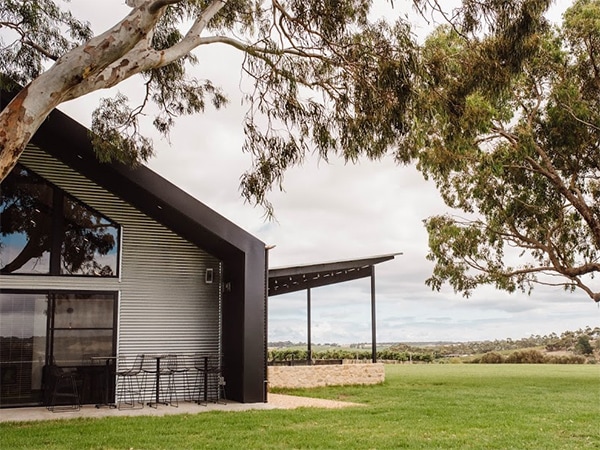
Condense a few experiences at Chalk Hill Collective.

Stay: It may be small, but this ‘Escapod’ is ultra-sleek. The Cadole Avalon at The Vineyard Retreat is a beauty from every angle.

Day five: McLaren Vale to Cape Jervis (1 hour) to Kangaroo Island (45 minutes)

If you happen to be departing the ’Vale on a Saturday, before you go, swing by the Willunga Farmers Market to stockpile some supplies for the crossing to Kangaroo Island.
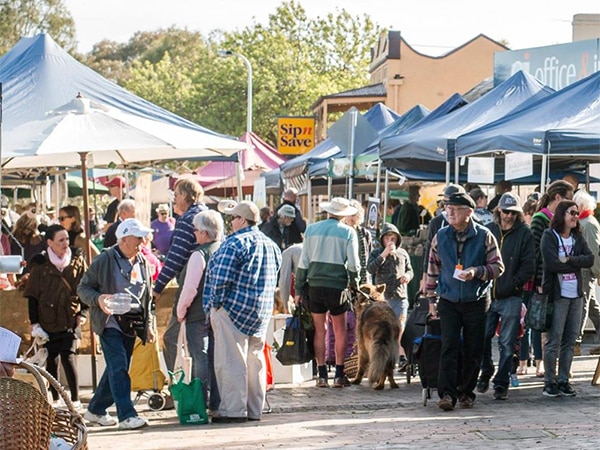
It all happens at Willunga Farmers Market.

Hot Tip: SeaLink offers daily ferry services from Cape Jervis to Kangaroo Island. It’s best to check their website for prices and special offers, as they occasionally discount fares. As a rough guide, expect to pay around $98 for a vehicle and $74 per person, and be sure to book in advance.

Stay: From camping grounds to holiday rentals and luxury lodges, there’s accommodation to suit every traveller on the island.
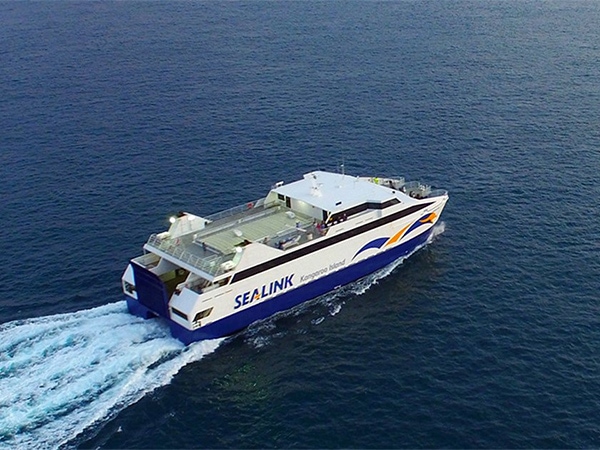
Sealink takes you comfortably to Kangaroo Island.

Weekly travel news, experiences
insider tips, offers, and more.

Day six: Kangaroo Island

Awaken to beauty so absorbing you’ll make an impassioned pact with your travelling companion to return. The rugged beauty, crystalline waters and serene beauty of the island will keep you gushing.
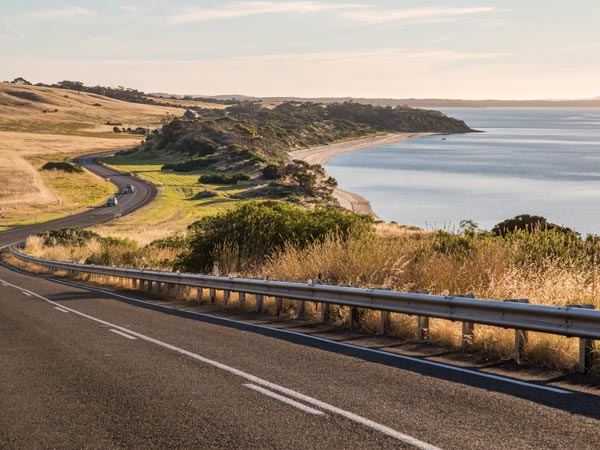
Penneshaw Kangaroo Island
Drive the coast of the beautiful Kangaroo Island. (Image: Tourism Australia)

Hot tip: There’s so much to do on Kangaroo Island, it’s lucky you’ve pledged to return, as you won’t get to it all in just two days. Make sure, though, to visit Vivonne Bay with its dreamscape white-sand beach and enticing waters. Keeping to nature, a stroll around the Remarkable Rocks and Admirals Arch is imperative.
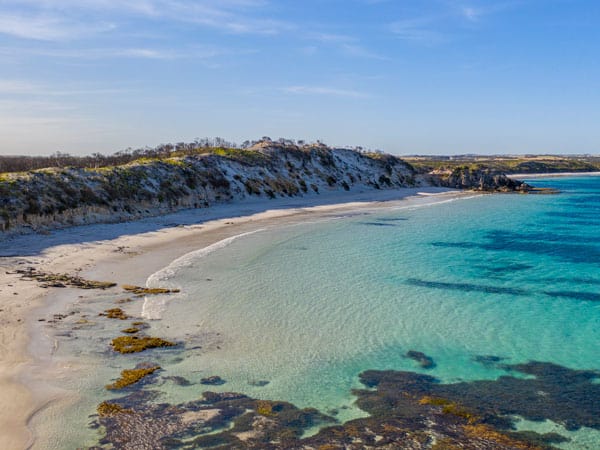
Vivionne Bay, Kangaroo Island.
Vivonne Bay, Kangaroo Island. (Image: South Australian Tourism Commission)

But you have permission to temper all that fresh, coastal air with a trip to Kangaroo Island Spirits and some of the small island wineries. After all, it’s best to stay on theme.
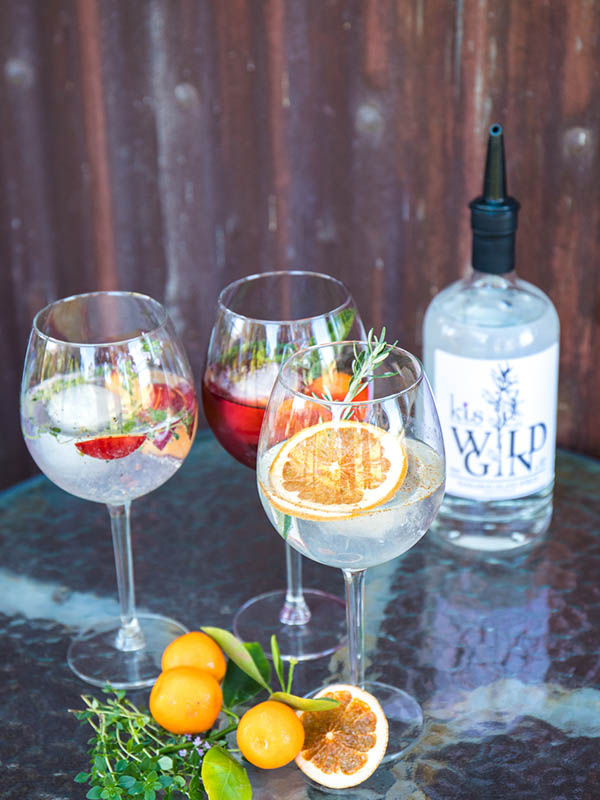
Kangaroo Island Spirits, Kangaroo Island, South Australia
Book a table in the Gin Garden to enjoy the Wild Gin. (Image: South Australian Tourism Commission)

Stay: If your South Australian road trip calls for a grand finale, book this evening’s accommodation at Oceanview Eco Villas. These two elegantly appointed villas offer up restorative island outpost vibes with their clifftop locale.

Day seven: Kangaroo Island to Adelaide (4 hours)

As you make the return crossing from Penneshaw to Cape Jervis, reflect on the diverse beauty, inspiring locals and enduring spirit of South Australia. This itinerary is a welcome reminder, that while we’re often quick to book an overseas flight, some of the world’s most astonishing landscapes and attractions are just a road trip away.
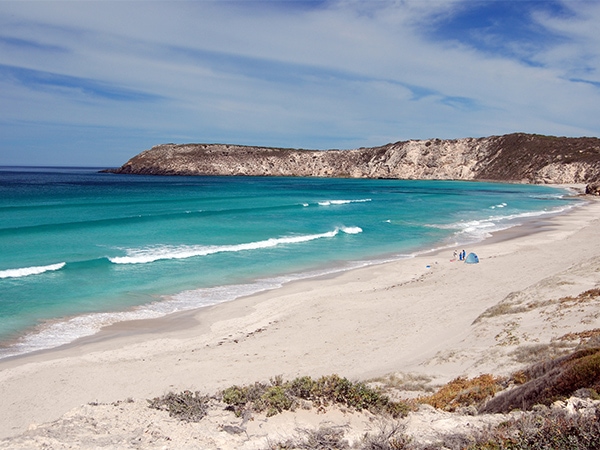
Pennington Bay beauty on display.
Lara Picone
Working for many of Australia’s top publications, Lara Picone has had the distinct pleasure of writing, editing and curating content about the finer things in life for more than 15 years. Graduating from Macquarie University with a Bachelor of Arts in Communication, her editorial foundation began at Qantas: The Australian Way magazine, before moving on to learn the fast-paced ropes of a weekly magazine at Sunday Magazine and picking up the art of brand curation at donna hay magazine. Pivoting a near-problematic travel lust into a career move by combining it with storytelling and a curious appetite, her next role was as Deputy Editor of SBS Feast magazine and later Online Editor of SBS Food online. She then stepped into her dream job as Editor of Australian Traveller before becoming Online Editor for both International Traveller and Australian Traveller. Now as a freelancer, Lara always has her passport at-the-ready to take flight on assignment for the Australian Traveller team, as well as for publications such as Qantas Magazine, Escape and The Weekend Australian. As ever, her appetite is the first thing she packs.
View profile and articles
hero media

Good food, beautiful nature & history: your guide to a long weekend in West Gippsland

(Credit: Rob Blackburn)

    Carla Grossetti Carla Grossetti
    From rainforest walks and scenic drives to historic gold-rush towns and standout regional dining experiences, you can find it all in West Gippsland.

    Hover over West Gippsland on Google Earth and you’ll see vast tracts of land spread out like green velveteen around the Toorongo Falls Reserve. It’s a landscape that feels almost impossibly lush for a region sitting little more than an hour from Melbourne.

    Track southeast in late autumn and early winter and you’ll see pockets of the Mt Baw Baw Plateau dusted in snow. In addition to the forests of mountain ash veined with creeks and rivers, there are pastures and farmland cross-stitched together to form pretty patchworks.

    But West Gippsland isn’t defined by scenery alone: in addition to its awe-inspiring nature, a Venn diagram of the region includes gold-rush history and great culinary experiences.  Spend a long weekend here and it quickly becomes clear how often these three overlap.

    Getting there

    Messmates Dining west gippsland
    Spend the weekend eating and exploring in West Gippsland. (Credit: Messmates Dining)

    Getting to West Gippsland involves as easy drive – it’s just over an hour out of Melbourne along the Monash Freeway.

    Not driving? Catch the train from Melbourne on the Gippsland line, terminating at either Traralgon or Bairnsdale, and hop off at Warragul or Drouin.

    Visit historic villages

    Walhalla historic township
    Wander into Australia’s Gold Rush history at Walhalla. (Credit: Rob Blackburn)

    The West Gippsland region is on the Traditional Lands of the Kulin and Kurnai nations, specifically linked to the Bunurong, Gunaikurnai and Wurundjeri Peoples, whose connection to Country stretches back thousands of years.

    European settlement occurred in the 19th century as timber cutters, farmers and gold seekers pushed into the region’s dense forests. Small towns grew around sawmills and railway lines, and many of those gold rush settlements, timber towns and railway villages still shape the character of the region today.

    The most evocative of these is Walhalla Historic Township, a remarkably preserved gold-rush township tucked deep in the mountains. In the late 1800s, it was one of Victoria’s richest goldfields. Today visitors can step inside that history at the Long Tunnel Extended Gold Mine, where underground tours reveal the scale of the mining operation that once powered the town’s prosperity. Nearby, the Walhalla Goldfields Railway retraces part of the original narrow-gauge line through the valley, offering a slow journey past forest and river scenery.

    Further west, Noojee is a classic mountain village. It’s surrounded by dense forest and waterfalls and has become a natural base for exploring the Baw Baw region. Just outside town, Noojee Trestle Bridge stands as one of West Gippsland’s most striking relics of the rail era. The towering wooden structure is the tallest surviving trestle bridge in Victoria and today forms the centrepiece of an easy scenic walk with wide views across the valley.

    Alpine Trout Farm west gippsland
    Catch your own lunch at Alpine Trout Farm. (Credit: Nicky Cawood)

    At Alpine Trout Farm near Noojee, visitors can fish for trout in mountain-fed ponds before enjoying the catch prepared fresh onsite. It’s a simple experience that reflects the area’s long connection to the surrounding waterways.

    Back in Warragul, the region’s main service town, the story shifts from heritage to modern regional life. With galleries, restaurants and sweeping views across the rolling farmland of Gippsland, the town has become a lively hub linking the district’s past with its evolving food and cultural scene. Drive through the town and you’ll find heritage buildings, old pubs and weatherboard cottages that hint at the area’s early days as a frontier landscape.

    In other towns the past survives in quieter ways – a historic hall here, a century-old bakery there.

    Walks, waterfalls and wild places

    Toorongo Falls in west gippsland
    Stroll Toorongo Falls Reserve. (Credit: Nicky Cawood)

    Even simple roadside stops can feel cinematic in West Gippsland. The region also delivers plenty of opportunities to lace up your walking shoes.

    One of the region’s most rewarding nature escapes lies just outside Noojee at Toorongo Falls Reserve. A network of walking tracks winds through the cool-temperate rainforest where towering mountain ash trees filter the light and the air smells of rich, damp earth. The 2.2-kilometre trail to the viewing platform overlooking Toorongo Falls is short, but spectacular, as the water cascades down over moss-covered rock faces into a cool, green gully in Little Toorongo River.

    Further north, the Mount Baw Baw Alpine Resort offers year-round adventures. In winter, the mountain attracts skiers and snowboarders. The warmer months are just as compelling, with scenic drives to see alpine wildflowers, mountain bike trails and panoramic hiking routes that open across the plateau.

    Cyclists and walkers looking for a more relaxed pace can follow the Rokeby Neerim Rail Trail, which traces a former railway line through farmland and small Gippsland villages. The mostly flat trail passes rolling paddocks, creeks and historic bridges, making it an easy way to drop it down a gear when exploring the countryside.

    Taste the best eats of West Gippsland

    Hogget Kitchen west gippsland
    Taste the best of the region at Hogget Kitchen.

    For many travellers, the real drawcards of West Gippsland are the food and wine. The region sits in the heart of Victoria’s fertile dairy country, and that agricultural backdrop has helped shape a dining scene where seasonal produce and local provenance take centre stage.

    Hogget Kitchen has helped put Warragul firmly on the radar for serious regional dining in West Gippsland. Here, head chef and owner Trevor Perkins runs the kitchen alongside well-known winemakers William (Bill) Downie and Pat Sullivan. Hogget Kitchen lives up to its promise of exceptional destination dining; what lands on the table depends largely on what nearby farms have harvested that week as well as a wine list from Wild Dog Winery and other Gippsland producers.

    Warragul is also where you’ll find Messmates Dining where the kitchen team is led by Michelin-trained chefs. The Euro-leaning bistro and wine bar brings a polished edge to the local dining scene using produce sourced from across West Gippsland.

    For something more casual, the century-old Noojee Hotel is the kind of hub that every traveller dreams of finding after a long drive. Expect generous pub classics served on the sunny deck in summer or beside the crackle of a log fire in winter.  Nearby, rustic Toolshed Bar, Bistro & Cabins is the place to go for a wood-fired pizza topped with smoked local trout paired with Gippsland wine, making it a rewarding stop for lunch or an overnight stay.

    Time your visit with the Truffle Festival

    Food lovers visiting in winter should consider timing their trip to coincide with Noojee Truffle Festival, running from 10 July to 2 August 2026. The inaugural event celebrates the region’s emerging truffle industry with tastings, special menus and events built around one of winter’s most prized ingredients.

    Start planning your long weekend in West Gippsland at visitgippsland.com.au.