The 12 best winter escapes in Australia: from beaches to mountains

hero media
Hike through a forest doused in fresh powdery snow, visit a towering waterfall only accessible on foot in the dry, and idle on a 22-kilometre-long beach in temperatures close to 30°C with these winter escapes.

To many, both at home and abroad, Australia conjures images of infinite summer; of a sun-scorched interior and a balmy, pristine coastline fringed by primeval rainforest. While both are deservedly hallmarks, there is, of course, plenty more to this continent than the heat (or beaches) with which it’s become synonymous. From snowy mountainscapes to deserted island beaches, and arid bushland freckled with swimming holes only accessible in the dry, these winter escapes will have you second-guessing which is the best season to head off on a jaunt.

Discover the beaches

In spite of winter’s cool breath, Australia’s beaches still beckon – if you know where to look. And with next to no jellies, fewer crowds, and some comfortably warm weather up north, dare we say that winter may actually be the better season to throw on your swimmers and make for the coast?

1. Hyams Beach, NSW

This lengthy, bone-white stretch of sand needs little introduction. Come summer, it can be tough to carve out a small parcel of beach to call your own, let alone snare a car park. But in winter, this beach is almost unrecognisable thanks to the dearth of holidaymakers. We propose rocking up early with a coffee in hand and a breakfast picnic, to idle in the serenity and listen to the sound of the sleepy waves lapping inches from your toes.
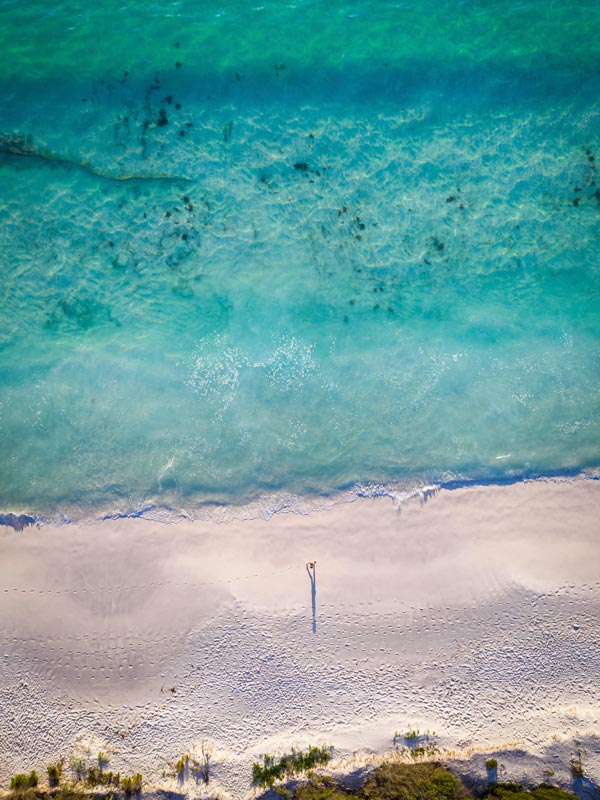
Aerial shot of someone walking on Hyams Beach in NSW
In winter you’ll have Hyams Beach (almost) to yourself. (Image: Filippo Rivetti)

2. Whitehaven Beach, QLD

The Whitsundays is not an area shy of impressive littoral landscapes, but Whitehaven Beach is arguably the jewel in the region’s crown. A dreamy seven-kilometre long slice of coastline, marbled with chalky sandbars and neon turquoise waters, it’s understandably busy year-round. Visit between June and November, however, and you can avoid peak stinger season as well as the sticky heat and frequent showers that occur in summer in Tropical North Queensland. Not only that, but the average water temperature in winter is still a highly agreeable 22.4°C.
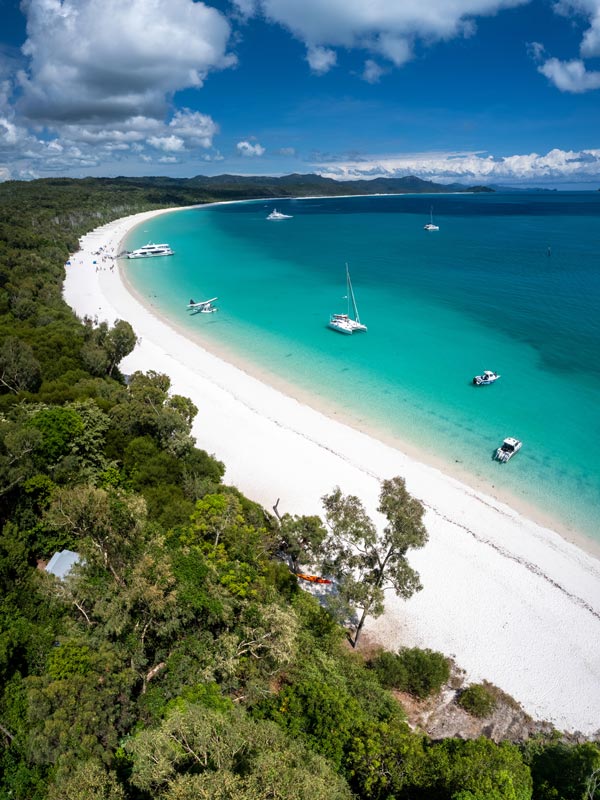
Drone shot of Whitehaven Beach in th Whitsundays in Queensland
Whitehaven Beach in the winter means you’ll avoid peak stinger season. (Image: Tourism and Events Queensland and Mark Fitz)

3. Cable Beach, Broome, WA

Winter, but not as Southern Australians know it: Broome averages highs of around 29°C in June, July and August, making it the perfect spot for a winter sun getaway. And visiting between May and October also means you’ll avoid the jellies and the tropical downpours.

Time your visit right, and you can even witness the natural phenomenon ‘Staircase to the Moon ’, which occurs between March and October when a full moon rises over the exposed tidal flats of Roebuck Bay.
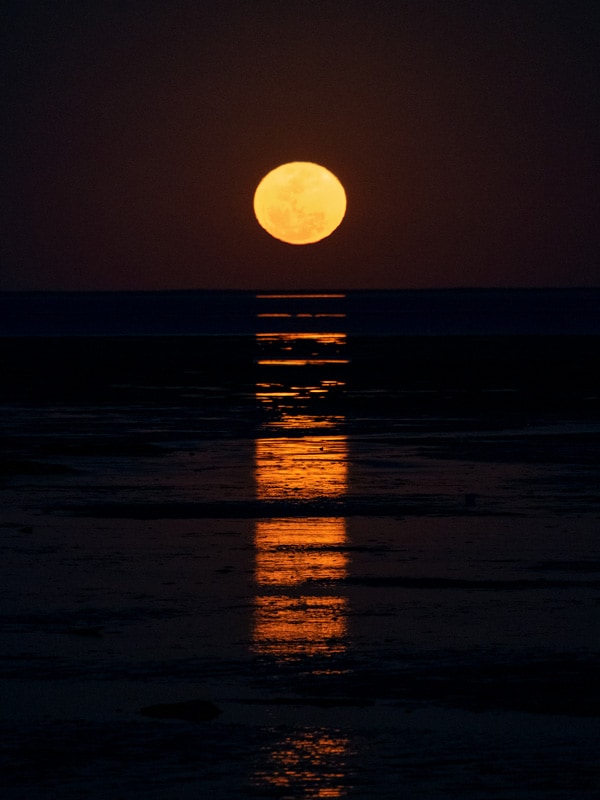
Staircase to the Moon in Broome, Western Australia
Time your visit to see the Staircase to the Moon. (Image: Charlotte and James Maddock)

4. Almonta Beach, SA

South Australia’s Almonta Beach, located within the Coffin Bay National Park, is as pristine as they come. Despite being accessible by 2WD, and just a short walk through sand dunes, you’ll often find this coastal paradise nigh on deserted; that is, save for the pods of dolphins that routinely patrol the waters and the mobs of kangaroos that bound along the beach’s perimeter.

Moreover, you’re only a short drive from another of the state’s most famed crescents of sand: Coffin Bay. The trump card here, however, is not the sea’s hue, or the softness of the sand, but rather the world-class oyster farms. And come winter, you can enjoy Pacific and Angasi oysters plucked and shucked fresh from the water you’re standing in when they’re at their absolute prime (anywhere from April to early December).
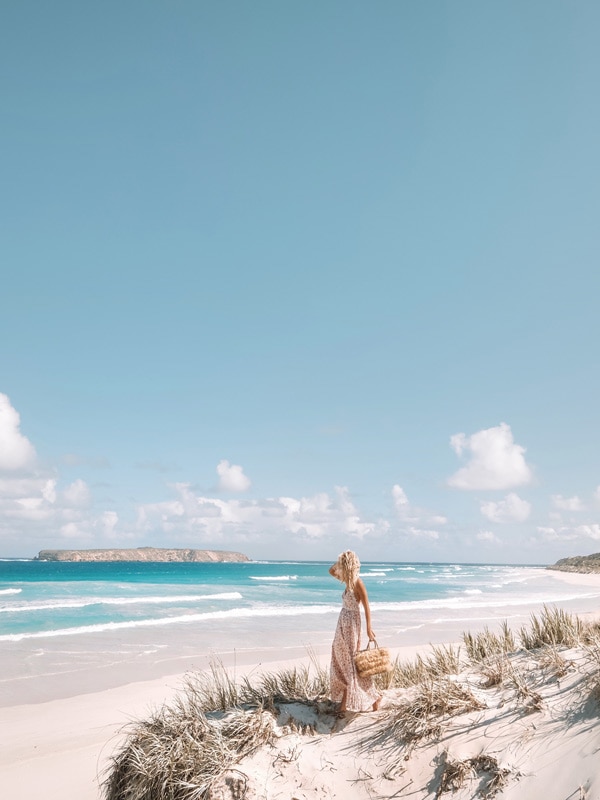
Woman standing on Almonta Beach in South Australia
Almonta Beach is as pristine as they come. (Image: South Australian Tourism Commission and Elise Cook)

Visit the snow-capped mountains

Australia’s snow-capped mountains mightn’t be as well-known as those that grace neighbouring NZ , but that’s not to say there isn’t plenty of dramatic winter beauty to be found right here under our noses. There’s a surprising amount of choice too: pick from 16 ski resorts across New South Wales, Victoria, and Tassie, each with its own unique features.

5. Thredbo, NSW

Home to Australia’s longest ski runs, highest restaurant and highest ‘lifted’ point (where you can even ring a community bell to mark your arrival) Thredbo has some superlative features. The NSW town is also among the country’s most bustling and picturesque, taking its cues from Europe’s mountain resorts, with plenty of apres options on offer.

Yet families will find Thredbo equally accommodating: watch on as your little ones learn to snowplough at the local ski school, demolish a deluxe house hot chocolate on the sun-licked deck at Merritts Mountain House, splash around in the resort’s leisure centre pool, and watch on as fireworks dance across the sky during the weekly winter display.
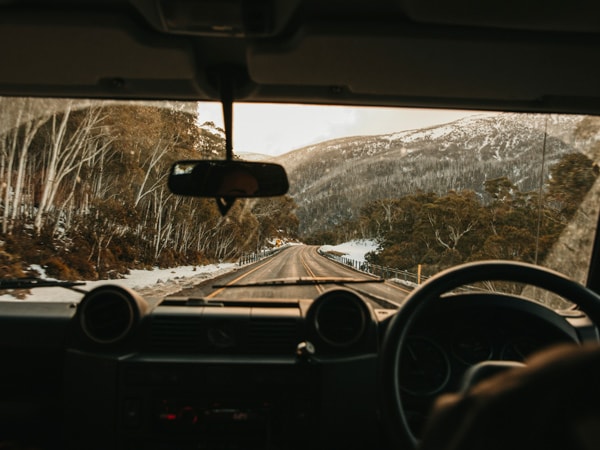
Driving in Thredbo with the snow covered mountains around.
Thredbo takes its cues from Europe’s mountain resorts. (Image: Destination NSW)

6. Perisher, NSW

A behemoth, Perisher is not just the largest ski resort in Australia, but the biggest in the entire Southern Hemisphere. There are more than 1,245 skiable hectares to tackle here, (which, by the way, is more than double the area offered by its closest competitor, Thredbo) with a web of 110 trails spinning down from the top of the eponymous mountain. And if, miraculously, it feels as though you’ve exhausted every last run then take to the toboggan park, or go snow tubing instead.
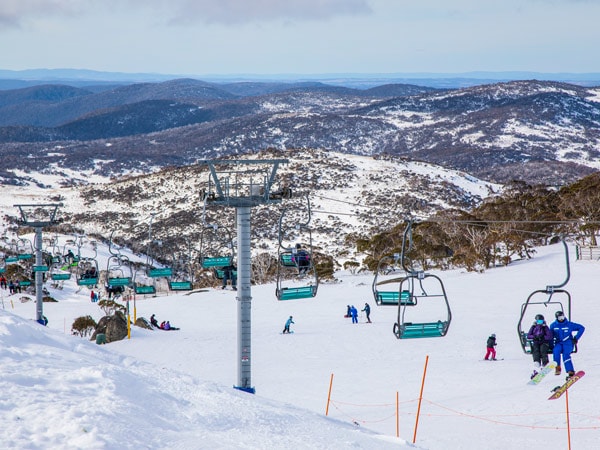
Chair lift at Blue Cow Perisher in New South Wales
Perisher is the largest ski resort in the entire Southern Hemisphere. (Image: Destination NSW)

7. Falls Creek, Vic

Two aspects set Falls Creek apart from the rest of the competition: its sizable cross-country terrain (more than 64 kilometres of groomed cross-country trails) and its ski village, which is pedestrian-only, meaning that all the accommodation, dining, day spas and on-piste activities are ski-in/ski-out. As dusk falls and lights flicker on, wander around the snowy streets, and duck into one of the cosy bars for a cocktail; come sunrise, be the first to hit the untouched off-piste cross-country trails in the Alpine National Park, and lap up the tranquillity as the first golden light peeps over the mountaintop.
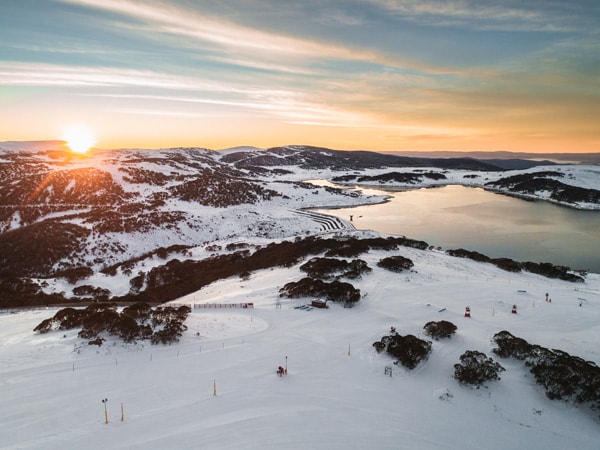
Drone shot of Falls Creek at sunrise
All the Falls Creek accommodation, dining, day spas and on-piste activities are ski-in/ski-out. (Image: Jezzalanko Creative)

8. Mount Hotham, Vic

Laughing in the face of tradition, Mount Hotham village lies at the top of the mountain, promising visitors panoramic views of a landscape blanketed in snow. And many of the local accommodation offerings have capitalised on this feature, offering their guests bedrooms and living spaces with floor-to-ceiling windows: perfect for watching the sun sink over the crumpled mountains before you, a glass or red in hand, and a log fire crackling in the background.
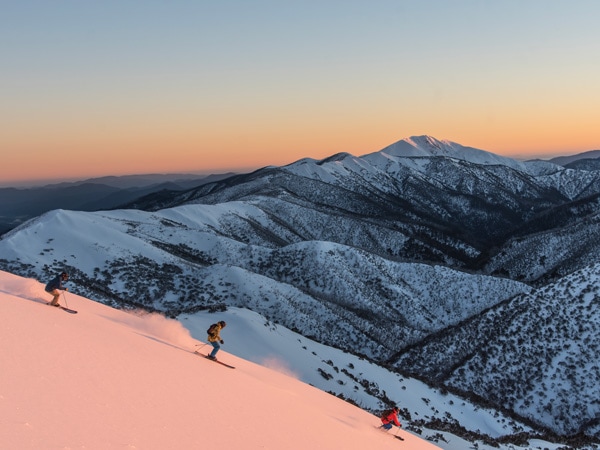
Skiers heading down slopes at Mount Hotham in Victoria
Mount Hotham promises visitors incredible panoramic views.

Explore the National Parks

Encompassing some of the country’s most iconic sights, and showcasing the diversity that this continent has to offer, Australia’s national parks are a failsafe for rewarding holidays in nature. And while many are year-round destinations, a select few come into their prime when cooler climes fall.

9. Uluru-Kata Tjuta National Park, NT

Uluṟu-Kata Tjuṯa National Park is a wonder to behold at any time of year. But winter and spring promise tolerable heat (between 20°C and 30°C) and minimal flies, making it easily the best time to visit. Journey here in the early morning and enter an otherworldly landscape, where mists (kulyar-kulyarpa) may have descended, and morning frosts (nyinnga) have taken hold of the hardy local flora. The Anangu people know the season from late May to July as ‘Wari’.
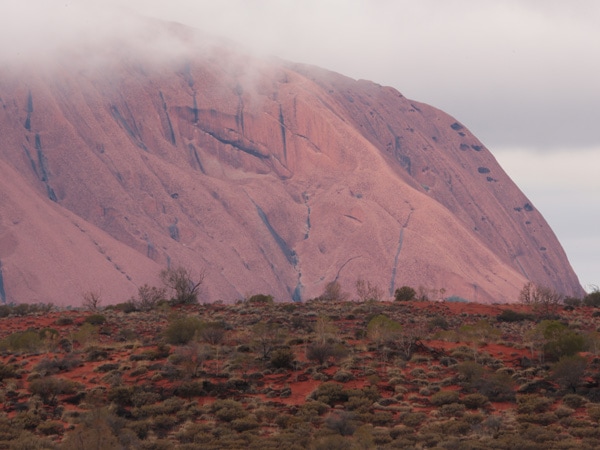
Rain clouds over Uluru
An Uluru winter will bring mists (kulyar-kulyarpa) and morning frosts (nyinnga). (Image: Tourism NT and Tourism Central Australia)

10. Kakadu National Park, NT

The largest national park in Australia, Kakadu covers almost 20,000 square kilometres, making it larger in size than Fiji. It’s said to house the greatest variety of ecosystems on the continent, featuring savanna woodlands, open forest, floodplains, mangroves, tidal mudflats and coastal areas. But many of the park’s most enticing attractions, such as hikes to billabongs and towering waterfalls, guided walks through Kakadu’s Aboriginal rock art galleries, and cooling dips in the park’s croc-free swimming holes, are only accessible in the dry (between May and October).
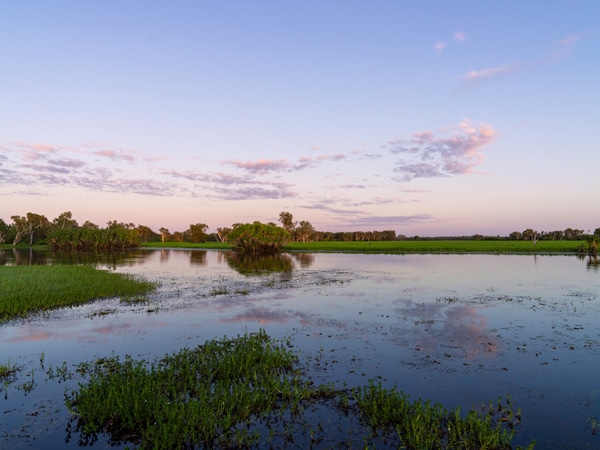
Yellow Water Cruise Kakadu
Kakadu is more accessible in the dry season. (Image: Tourism NT and Tourism Australia)

11. Dirk Hartog Island National Park, WA

Accessible via a barge that operates solely between March and November, Dirk Hartog is a remote destination awash with dramatic natural beauty that’s an adventurer’s paradise. Think lofty limestone cliffs smashed by untamed ocean swells; crystalline waters teeming with bottlenose dolphins, humpback whales, manta rays, dugongs and turtles; and an arid scrub interior scattered with sand dunes and vivid pink salt lakes.
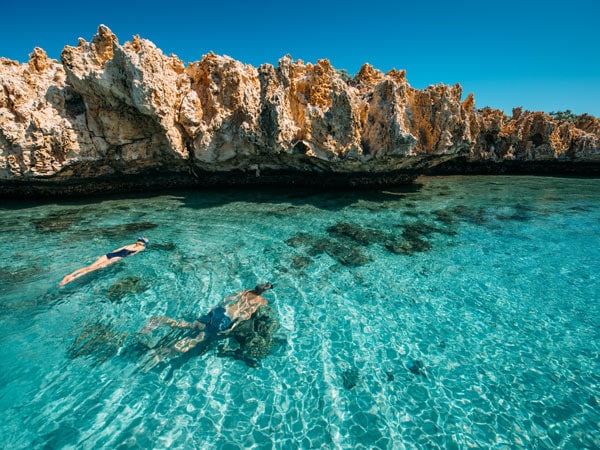
People snorkelling in Dirk Hartog Island National Park
You can only access Dirk Hartog between March and November. (Image: Tourism Western Australia)

12. Cradle Mountain-Lake St Clair National Park, Tas

Winter in Tassie? The prospect may alarm some, but the Apple Isle possesses a surprisingly hearty share of wintry attractions. Beyond the obvious (Dark Mofo , Willie Smith’s Mid-Winter Fest , Tasmanian Whisky Week ) the island state also offers the chance to spy Aurora Australis (the Southern Lights) fleeting through the steely night skies, and to wander through snow-dusted scenery. And Cradle Mountain-Lake St Clair National Park offers an opportunity to do both, as well as dabble in snowshoeing or even tackle the Overland Track. You’ll encounter quiet trails, frozen lakes and mossy forests anointed with frost.
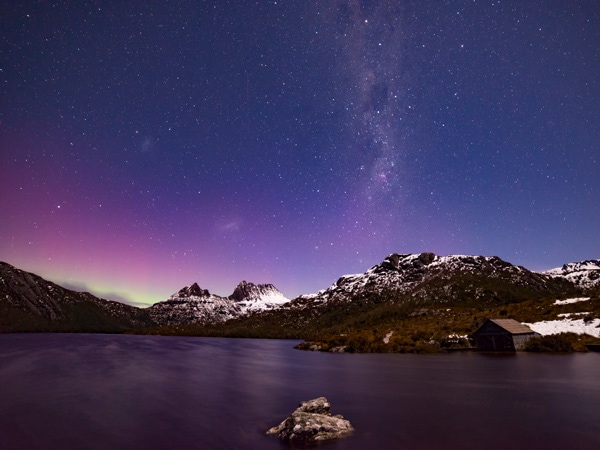
Southern Lights at Cradle Mountain-Lake St Clair National Park in Tasmania
Spot the Southern Lights at Cradle Mountain-Lake St Clair National Park. (Image: Pierre Destribats)
Chloe Cann
Chloe Cann is an award-winning freelance travel and food writer, born in England, based in Melbourne and Roman by adoption. Since honing her skills at City St George's, University of London with a master's degree in journalism, she's been writing almost exclusively about travel for more than a decade, and has worked in-house at newspapers and travel magazines in London, Phnom Penh, Sydney and Melbourne. Through a mixture of work and pleasure, she's been fortunate enough to visit 80 countries to date, though there are many more that she is itching to reach. While the strength of a region's food scene tends to dictate the location of her next trip, she can be equally swayed by the promise of interesting landscapes and offbeat experiences. And with a small person now in tow, travel looks a little different these days, but it remains at the front of her mind.
See all articles
hero media

Explore historic wine towns and sculpture trails on a 3-day self-guided Murray River cruise

Slow down and find your rhythm on a Murray River journey through time and place. 

Trust is a funny thing. It seems not that long ago that my mother was insisting on pouring the milk into my cereal bowl, because she didn’t trust me not to slosh it over the table, and yet here I am on the Murray River at Mildura in far north-west Victoria, being handed the keys to a very new and very expensive luxury houseboat. 

After a crash course in how not to crash, I’m at the wheel of the good ship Elevate – pride of the All Seasons fleet – guiding her upstream past red-ochre cliffs as pelicans glide above the rippled river and kookaburras call from reedy banks. There’s a brief moment of breath-holding while I negotiate a hairpin turn around a jagged reef of skeletal, submerged gum trees, before a cheer rings out and calm descends as the timeless river unfurls in front of us.    

Murray River
The Murray River winding through Yarrawonga. (Image: Rob Blackburn)

Setting sail from Mildura 

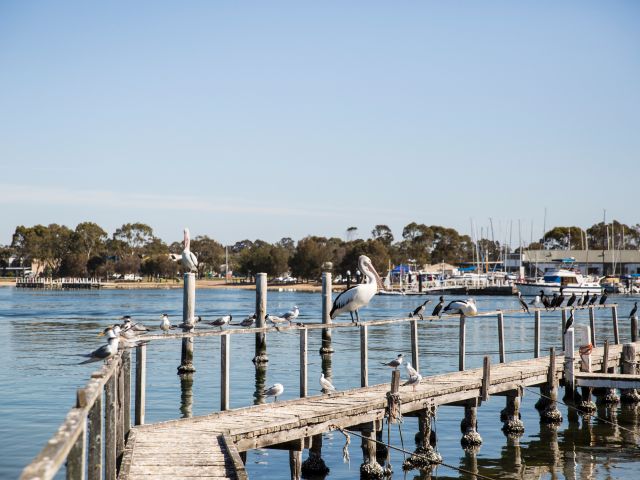
Murray River birds
Home to a large number of bird species, including pelicans. (Image: The Precint Studios)

A journey along the Murray River is never less than magical, and launching from Mildura makes perfect sense. Up here the river is wide and largely empty, giving novice skippers like myself the confidence to nudge the 60-tonne houseboat up to the riverbank where we tie up for the night, without fear of shattering the glass elevator (the boat is fully wheelchair accessible) or spilling our Champagne.  

My friends and I spend three days on the water, swimming and fishing, sitting around campfires onshore at night, and basking in air so warm you’d swear you were in the tropics. The simplicity of river life reveals an interesting dichotomy: we feel disconnected from the world but at the same time connected to Country, privileged to be part of something so ancient and special.  

Stop one: Echuca  

19th-century paddlesteamers
A historic 19th-century paddlesteamer cruises along the Murray River. (Image: Visit Victoria)

The six-hour drive from Melbourne to Mildura (or four hours and 20 minutes from Adelaide) is more than worth it, but you don’t have to travel that far to find fun on the river. Once Australia’s largest inland port, Echuca is the closest point on the Murray to Melbourne (two hours 45 minutes), and you’ll still find a plethora of paddlesteamers tethered to the historic timber wharf, a throwback to the thriving river trade days of the 19th century. The PS Adelaide, built in 1866 and the oldest wooden-hulled paddlesteamer operating in the world, departs daily for one-hour cruises, while a brand-new paddlesteamer, the PS Australian Star , is launching luxury seven-night voyages in December through APT Touring.  

The town is also a hot food and wine destination. St Anne’s Winery at the historic Port of Echuca precinct has an incredibly photogenic cellar door, set inside an old carriage builders’ workshop on the wharf and filled with huge, 3000-litre port barrels. The Mill, meanwhile, is a cosy winter spot to sample regional produce as an open fire warms the red-brick walls of this former flour mill.  

Stop two: Barmah National Park 

Barmah National Park
Camping riverside in Barmah National Park, listed as a Ramsar site for its significant wetland values. (Image: Visit Victoria/Emily Godfrey)

Just half-an-hour upstream, Barmah National Park is flourishing, its river red gum landscape (the largest in the world) rebounding magnificently after the recent removal of more than 700 feral horses. The internationally significant Ramsar-listed wetland sits in the heart of Yorta Yorta Country, with Traditional Owners managing the environment in close partnership with Parks Victoria. Walkways weave through the forest, crossing creeks lined with rare or threatened plants, passing remnants of Yorta Yorta oven mounds and numerous scar trees, where the bark was removed to build canoes, containers or shields.  

The Dharnya Centre (open weekdays until 3pm) is the cultural hub for the Yorta Yorta. Visitors can learn about the ecological significance of the Barmah Lakes on a 90-minute river cruise, led by a First Nations guide, or take a one-hour, guided cultural walking tour along the Yamyabuc Trail.  

Stop three: Cobram 

Yarrawonga MulwalaGolf Club Resort
Yarrawonga Mulwala Golf Club Resort. (Image: Visit Victoria)

Continue east to Cobram to find the southern hemisphere’s largest inland beach. Swarming with sun-seekers in summer, the white sand of Thompson’s Beach is shaded by majestic river red gums and dotted with hundreds of beach umbrellas, as beachgoers launch all manner of water craft and set up stumps for beach cricket. But the beach is at its most captivating at sunset, when the crowds thin out, the glassy river mirrors the purple sky, and the canopies of the gum trees glow fiery orange. 

The region is also home to some fine resorts and indulgent retreats. Yarrawonga Mulwala Golf Club Resort has two riverside championship golf courses, luxury apartments and self-contained villas. While not strictly on the Murray, the historic wine town of Rutherglen is rife with boutique (and unique) accommodation, including an exquisitely renovated red-brick tower in a French provincial-style castle at Mount Ophir Estate. Fans of fortified wines can unravel the mystery of Rutherglen’s ‘Muscat Mile’, meeting the vignerons and master-blenders whose artistry has put the town on the global map for this rich and complex wine style.  

Stop four: Albury-Wodonga 

First Nations YindyamarraSculpture Walk
First Nations Yindyamarra Sculpture Walk is part of the Wagirra Trail. (Image: Carmen Zammit)

Follow the river far enough upstream and you’ll arrive at the twin border cities of Albury-Wodonga. The Hume Highway thunders through, but serenity can be found along the five-kilometre Yindyamarra Sculpture Walk – part of the Wagirra Trail that meanders through river wetlands just west of Albury in Wiradjuri country. Fifteen sculptures by local First Nations artists line the trail, conveying stories of reconciliation, enduring connection to culture, local Milawa lore and traditional practices. It feels a long way from Mildura, and it is, but the pelicans and kookaburras remind us that it’s the same river, the great conduit that connects our country. 

A traveller’s checklist  

Staying there

New Mildura motel Kar-rama
New Mildura motel Kar-rama. (Image: Iain Bond Photo)

Kar-Rama is a brand-new boutique, retro-styled motel in Mildura, with a butterfly-shaped pool and a tropical, Palm Springs vibe. Echuca Holiday Homes has a range of high-end accommodation options, both on the riverfront and in town. 

Playing there

BruceMunro’s Trail of Lights in Mildura
Bruce Munro’s Trail of Lights in Mildura. (Image: Imogen Eveson)

Artist Bruce Munro’s Trail of Lights installation, comprising more than 12,000 illuminated ‘fireflies’, is currently lighting up Mildura’s Lock Island in the middle of the Murray. Murray Art Museum Albury (MAMA) is a hub for contemporary art, with a rotating roster of exhibitions, and is a major outlet for young and First Nations artists. 

Eating there

Mildura’s diverse demographic means it’s a fantastic place to eat. Andy’s Kitchen is a local favourite, serving up delicious pan-Asian dishes and creative cocktails in a Balinese-style garden setting. Call in to Spoons Riverside in Swan Hill to enjoy locally sourced, seasonal produce in a tranquil setting overlooking the river.