hero media

The 9 oldest pubs in Australia to make you step back in time

From a haunted inn that once concealed a tunnel to an insane asylum, to a roadhouse responsible for refuelling planes, these nine historic pubs are catnip for the curious pub patron.

Whether you’re travelling to a tiny settlement in the middle of the outback, visiting a buzzing state capital, or escaping to a bucolic country town, chances are you’ll find one unifying feature across all three. An Antipodean institution that’s practically as old as colonial Australia itself, the humble pub.

While a number of the country’s historic taverns have met an untimely end, either falling into disrepair or being pounced on by developers looking to make a quick dime, a clutch of heritage pubs have survived – some clocking up almost 200 years in the business.

Read on for a taste of the oldest pubs in Australia that will make you step back in time.

1. Macquarie Arms Hotel, Windsor, NSW
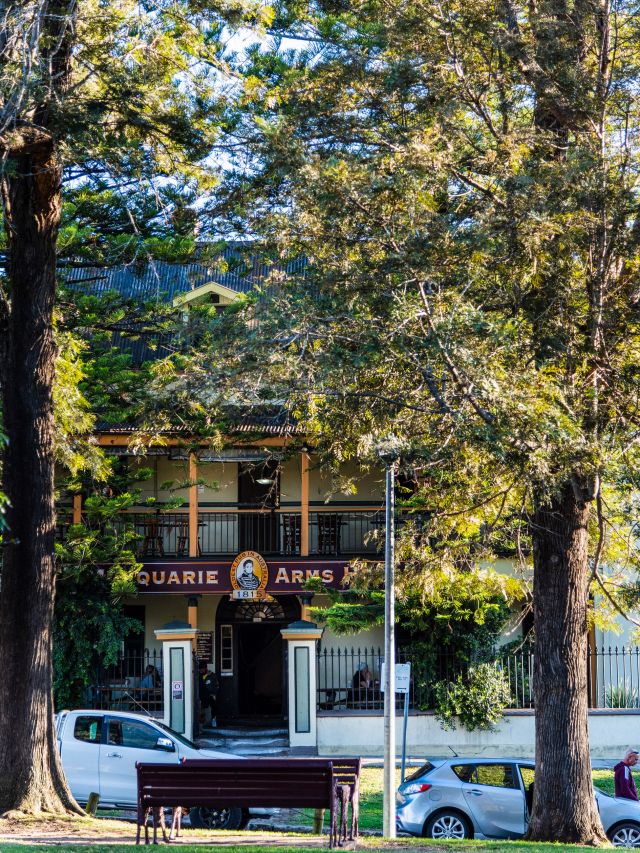
a historic building beneath tall trees at Macquarie Arms Hotel
Lush greenery surrounds the oldest pub on the Australian mainland. (Credit: Destination NSW)

As if its location, close to the meandering Hawkesbury River, wasn’t enough, this NSW pub also scores top marks for heritage. Having welcomed its first patrons in 1815, the Macquarie Arms Hotel claims to be the oldest pub on the Australian mainland and is said to be the most intact major commercial building dating back to pre-1820 Australian colonial history.

The current publicans have brought things a touch more up-to-date with their steady roster of live music, beer garden with kids’ playground attached, and pub grub menu (think burgers and schnitties aplenty).

But vestiges of the past still linger: marvel at the circular cedar staircase, eye the turned timber verandah posts, and wander through the large Georgian doorway, flanked by traceried sidelights.

Little-known fact: This storied property was built by convicts, who once called the hotel’s cellar home.

Address: 99 George St, Windsor, NSW

2. The Surveyor General Inn, Berrima, NSW

Looking to spice up a drive along the Hume Highway? Make a beeline for The Surveyor General Inn in the Southern Highlands. A picture-postcard watering hole in the heart of the Southern Highlands, The Surveyor General was built in 1834, licensed as an inn the following year, and still proudly bears the architectural features to prove it.

The main building is constructed of rough-hewn local sandstone and rendered sand stock bricks, with timber and pressed metal ceilings and a carved cedar bar that is close to celebrating its centenary.

Raise a glass to The Surveyor General’s historic legacy with a middy of local beer on the verandah come summer, or pull up a pew at the bar with a glass of red and wallow in the warm glow of the open fireplace come winter.

Little-known fact: The inn was visited by a number of notorious Bushrangers in the early days, and – according to legend – the son of one early licensee captured the elusive bushranger Thunderbolt in 1870.

Address: 26 Old Hume Hwy, Berrima, NSW

3. Hope and Anchor Tavern, Hobart, Tas
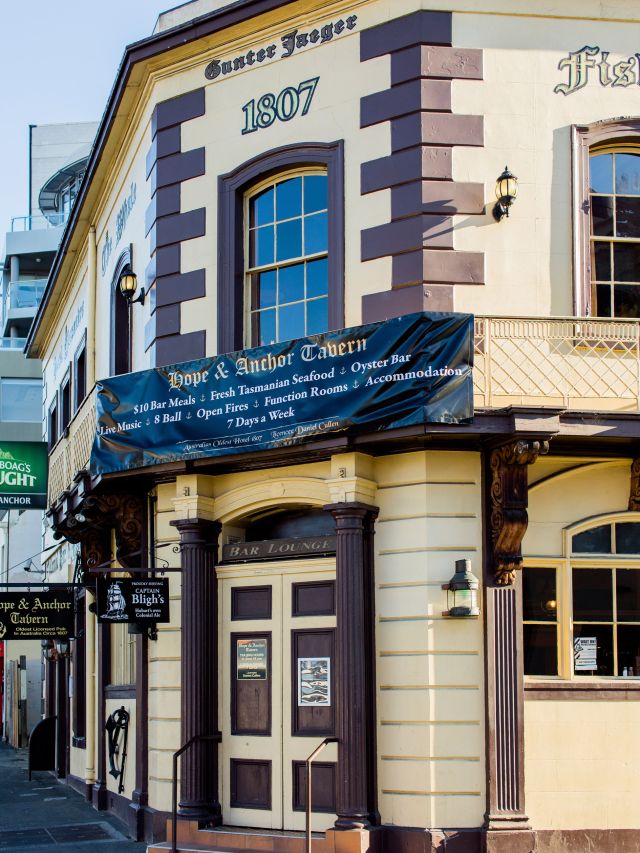
a vintage exterior at Hope and Anchor Tavern
Step into the vintage Hope and Anchor Tavern. (Credit: Tourism Tasmania and Adam Gibson)

Established in 1807, the Hope and Anchor Tavern is technically Australia’s oldest continuously licensed pub. Yet one caveat – the fact that it’s experienced periods of closure despite maintaining its licence – means that its New Norfolk cousin, the Bush Inn (more on that below) is often recognised as the country’s most historic boozer.

Whatever its classification, there’s little doubt that this Apple Isle tavern is well worth a visit.

Stepping inside the Hope and Anchor’s upstairs dining area is like walking into a living museum: antique wooden clocks, deer heads, sabres and rifles are mounted onto the golden brocade wallpaper, alongside olden portraits and under the light of chandeliers.

Little-known fact: The Hope and Anchor Tavern does a mean hot buttered rum – the perfect antidote to Tassie’s fresh and blustery weather.

Address: 65 Macquarie St, Hobart, Tas

Need tips, more detail or itinerary ideas tailored to you? Ask AT.

AI Prompt

4. The Bush Inn, New Norfolk, Tas
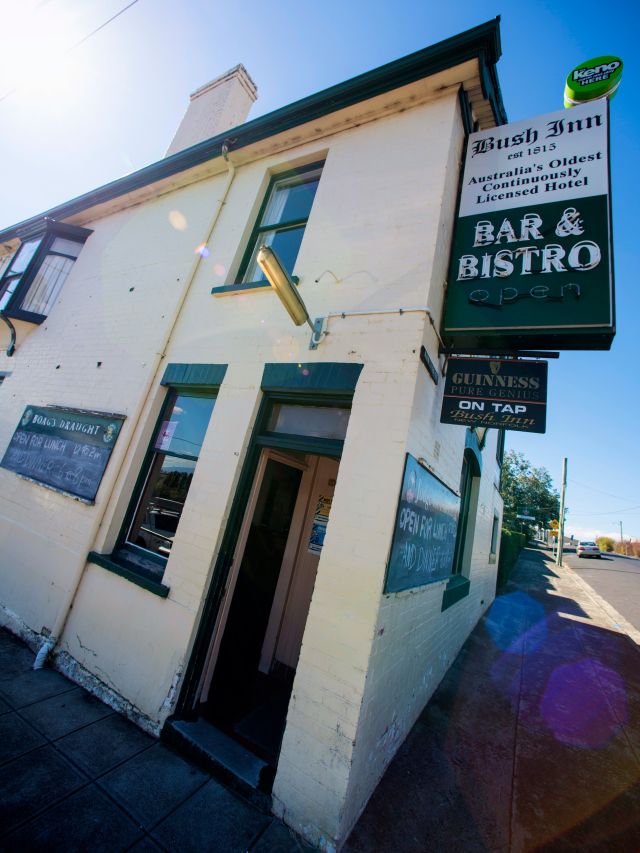
the historical exterior of Bush Inn Bar & Bistro
The Bush Inn is deemed Australia’s oldest pub. (Credit: Tourism Tasmania & Rob Burnett)

Said to be one of the most haunted spots in the country, The Bush Inn in Tasmania has become something of a ghost hunter’s Mecca. Located in the small town of New Norfolk, this 26-room hotel has been operating continuously since 1815 and is arguably the oldest Down Under.

Spooky goings-on are not the Bush Inn’s only claim to fame, however: Dame Nellie Melba stayed at the hotel (and sang there) during her 1924 visit to Tasmania, and in 1888, the first telephone call in the Commonwealth was made from the hotel.

The venue has recently been taken over by new owners who are set to renovate the pub, breathing new life into it while keeping its heritage roots.

Little-known fact: Below the pub lies a hidden tunnel that was used to transport patients from the Derwent River to the Royal Derwent Hospital (originally New Norfolk Insane Asylum), so they wouldn’t be seen.

Address: 49-51 Montagu St, New Norfolk, Tas

5. Nindigully Pub, Thallon, Qld
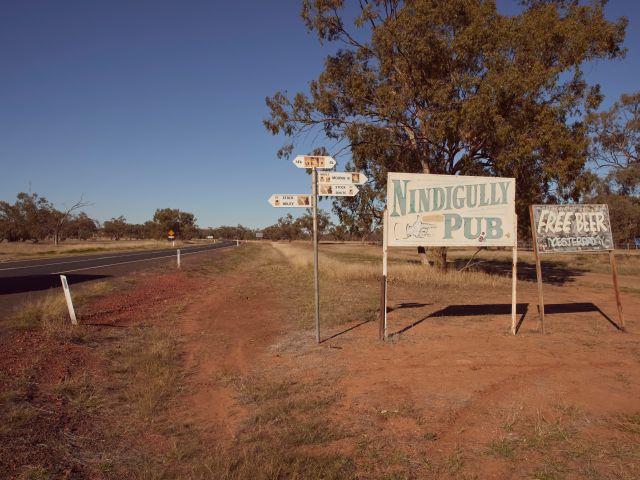
a dirt track road going to Nindigully Pub
Nindigully Pub is set on the banks of the Moonie River. (Credit: Tourism and Events Queensland)

Endearingly known as ‘The Gully’, this Queensland pub has been serving schooners since 1864, and the bar walls, plastered with memorabilia, stand as a testament to its different lives.

The property was once used by the sheep shearers that worked at neighbouring Nindigully Station as accommodation, and the Akubras of those same drovers line the walls, alongside vintage beer signs.

From the late 1800s, the Nindigully Pub served as a Cobb & Co changing station, with old black and white photographs that chronicle this period hanging in the cosy pub dining room.

Located down a dirt track road, on the banks of the Moonie River, not far from the border with NSW, this bush pub also features a beer garden dotted with palm trees and an open-air bar.

It offers free camping to visitors on its grounds, provides live country music on most weekends, and even has its own house brand beers on tap – the Gully Gold and Moonie Mud – as well as locally produced wine.

Little-known fact: The age of this Sunshine State venue isn’t its only virtue – the Nindigully Pub is also home to a 1.5kg beef patty known as the ‘Road Train’, which is said to feed up to six hungry punters. Those with an even bigger appetite can pre-order a ‘Real Big Mack’ which features a whopping 25kg patty of beef.

Address: Sternes Street, Nindigully, Qld

6. Rose and Crown, Perth, WA
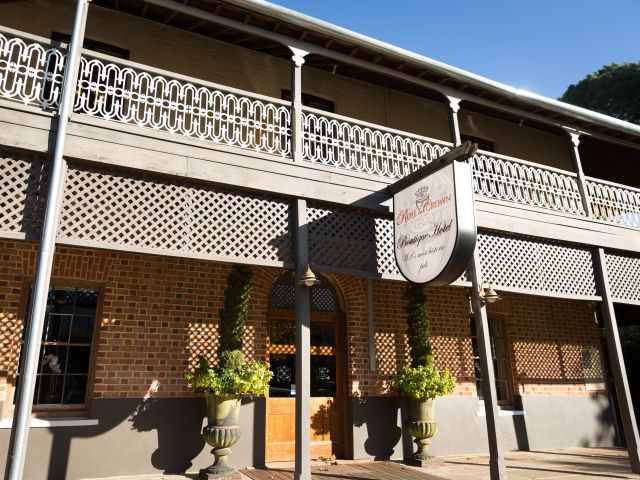
a classy pub exterior at Rose and Crown
Rose and Crown exudes classic country-style charm.

Located in WA’s popular Swan Valley wine region, in the thick of Guildford’s historic – and rather charming – Swan Street, the Rose and Crown is an obvious addition to any gourmet getaway. Built in 1841, it’s the oldest operating hotel in the state and a beautiful example of Georgian-style architecture.

Hole up in one of the property’s 28 ensuite lodge rooms and make a weekend of it, or swing by for a hearty meal (steak and Guinness pie with mash, roast pork with veggies, Cajun style squid and salad) and a chilled glass of local chenin blanc in the beer garden.

Little-known fact: Legend has it that the opening of the hotel led to a rise in drunk and disorderly behaviour, which in turn called for the construction of a jailhouse and courthouse on the next street.

Address: 105 Swan St, Guildford, WA

Weekly travel news, experiences
insider tips, offers, and more.

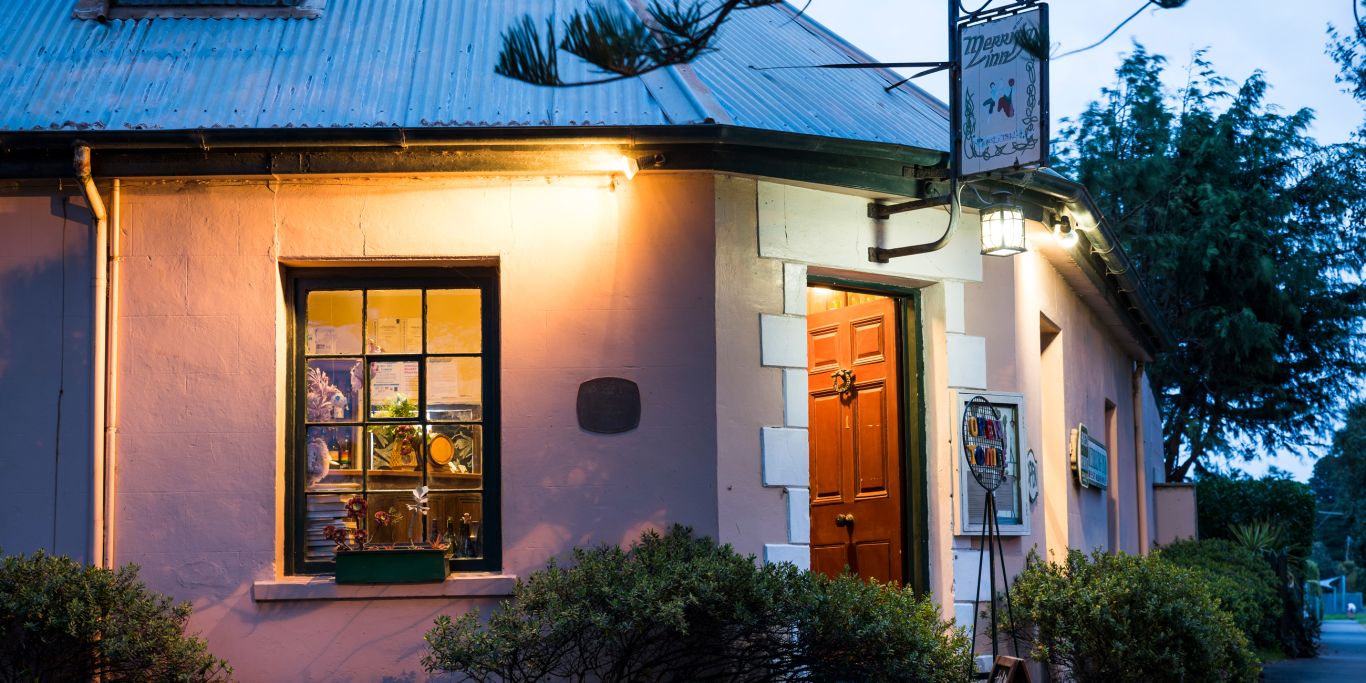
7. Merrijig Inn, Port Fairy, Vic
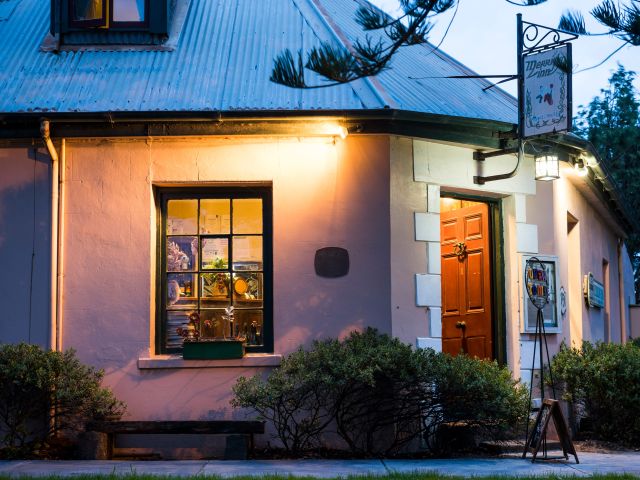
rustic exterior of Merrijig Inn
The Merrijig Inn has rustic charm.

Not only does Merrijig Inn happen to be one of Victoria’s oldest pubs, built in the mid-1800s, but this historic stone cottage is also among the most charming in the state. So charming, in fact, that it’s worth engineering an entire weekend away at Port Fairy just to bathe in all of the Merrijig Inn’s atmospheric glory.

While away an hour or three in the sun-licked Garden Bar with a glass of wine from its celebrated list, along with some housemade charcuterie. Order generously from the farm-to-fork menu, curated daily by acclaimed chef Tanya Connellan. And bed down in one of the ludicrously economical (and wildly cosy) attic rooms that feature antique iron beds and views over the Moyne River.

Little-known fact: This little property in regional Vic has formerly served as a magistrates’ court, a police station and barracks, a boarding house, and an antique shop before its current incarnation as a pub.

Address: 1 Campbell St, Port Fairy, Vic

8. Daly Waters Pub, Daly Waters, NT
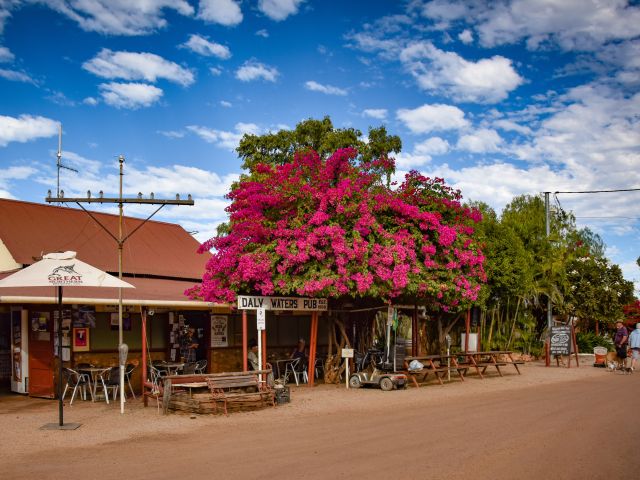
pink flowers bloom outside Daly Waters Pub
Visit the Daly Waters Pub for a drink. (Credit: Tourism NT/Kate Flowers)

An outback pub with a number of eccentric strings to its bow (or should that be bra?), the Daly Waters Pub is not quite as aged as some of the other venues on this list.

It started out life as a general store in the early 1930s and didn’t receive its publican’s licence until 1938, but that’s not to say it isn’t steeped in many a legend. From murders and drunken brawls to hauntings, main street shoot-outs, and cattle stampedes through this one-horse town (pop. 55), the roadhouse has seen it all.

And as outlandish as it may seem, the tiny settlement of Daly Waters, 600 clicks south of Darwin, was in fact the site of the first international airfield in Australia.

Former publican and Daly Waters Pub founder, Bill Pearce, was not only responsible for refuelling the passengers but also for refuelling the planes. You can still visit the aircraft hangar today – it’s located just a two-minute drive from the pub.

Plastered with all manner of curios, this kitsch pub is a prime example of pioneering Aussie spirit. Drink there, eat there, stay there, and lap up the atmosphere at this quintessentially Antipodean pub.

Little-known fact: The bras that can be seen dangling from the ceiling are said to have started accumulating in the 80s. And because the pub doesn’t have any windows, just flyscreens, these smalls are regularly washed.

Address: 16 Stuart St, Daly Waters, NT

9. The Old Canberra Inn, Canberra, ACT

Famously older than the city of Canberra itself, this suburban inn began life as a humble timber slab and pole home for Irish immigrants in 1857.

By 1876, it became a mail and passenger coach stop on the Yass to Queanbeyan run, serving beer and food to travellers, before transforming into a family home once again in 1887.

Finally, in 1976, after undergoing sensitive restorations, the property received its licence once again and became known as The Old Canberra Inn.

Today, a sense of the inn’s rich history still pervades its cosy interiors. Between its beamed ceilings, creaky wooden floors, and timber walls, you’ll find wood-burning fireplaces and Chesterfield sofas.

And what The Old Canberra Inn’s outdoor area lacks in historical artefacts, it makes up for with a family-friendly space that promises a spacious paved beer garden, complete with a children’s play area.

Little-known fact: The Shumack family, who built the original hut on this very plot, is credited with making substantial contributions to the development of Canberra.

Address: 195 Mouat Street, Lyneham, ACT

Chloe Cann
Chloe Cann is an award-winning freelance travel and food writer, born in England, based in Melbourne and Roman by adoption. Since honing her skills at City St George's, University of London with a master's degree in journalism, she's been writing almost exclusively about travel for more than a decade, and has worked in-house at newspapers and travel magazines in London, Phnom Penh, Sydney and Melbourne. Through a mixture of work and pleasure, she's been fortunate enough to visit 80 countries to date, though there are many more that she is itching to reach. While the strength of a region's food scene tends to dictate the location of her next trip, she can be equally swayed by the promise of interesting landscapes and offbeat experiences. And with a small person now in tow, travel looks a little different these days, but it remains at the front of her mind.
View profile and articles
hero media

Taking the route less travelled along the Great Ocean Road

The Great Ocean Road has captured the hearts of Australians with its astounding scenery since 1932, but going off-course can enrich your experience with untouched nature, foodie delights and charming towns. 

It’s a chilly 16 degrees. My husband pulls on a steamer and jogs – as all seasoned surfers do – into the water. We’re at Bells Beach, the legendary break on Victoria’s Surf Coast that’s home to the Rip Curl Pro, the world’s longest-running event in competitive surfing. Each year, over the Easter long weekend, up to 40,000 people descend on the region for the event. Today, though, we have the beach almost to ourselves, and the less-than-favourable temperature doesn’t deter my husband from surfing this famous break.  

Bells Beach
Bells Beach is known for its epic surf break and is at the start of the Great Ocean Road. (Image: Tourism Australia)

Torquay to Anglesea and Aireys Inlet 

Split Point Lighthouse
The red dome of Split Point Lighthouse in Aireys Inlet. (Image: Tourism Australia)

The nearby surf town of Torquay marks the starting point for the Great Ocean Road. Unfolding our map, which we have marked out with a highlighted route for our children to follow, we set off for lesser-known Anglesea, a chilled-out town 20 minutes south of here. Its wide, sandy beach is a gentler swimming option for our young family. Groms can learn to surf here with Go Ride a Wave, which also runs stand-up paddle boarding on the Anglesea River.  

Split point lookout
The lighthouse overlooks the Shipwreck Coast. (Image: Tourism Australia)

After a couple of nights in Anglesea, we hit the road again, first stopping at Aireys Inlet. Here we stretch our legs at Split Point Lighthouse, which was made famous by the 1990s television series Round the Twist, before driving under the Memorial Arch that welcomes us, officially, to the Great Ocean Road.  

This 243-kilometre coastal road was built by returned First World War servicemen and serves as a permanent memorial to those who fought and died during the war. Carved into rock using hand tools and horse-drawn carts, it was a huge engineering feat and provided much-needed access to isolated coastal communities. 

Lorne to Birregurra 

Lorne is a delightful beachside stop for lunch and browsing boutique stores. It’s also the gateway to Great Otway National Park, which comprises a varied landscape of old-growth forests, cool-temperate rainforests, heathy woodlands and rugged coast. With the highest rainfall in Victoria, the region is home to many waterfalls – 10 of which are within 10 kilometres of Lorne.  

Turning slightly off the main drag, we wind along a gum-shaded road to Erskine Falls. Here, our son leads the way through the hyper-green rainforest and down 200-plus stairs to the cascade that drops 30 metres into a lush fern gully. We hop over large boulders to get closer to the falls, enjoying the entire place to ourselves; it’s worth the return climb.  

From Sheoak Falls Picnic Area, there are walking trails to Henderson Falls, Phantom Falls, Won Wondah Falls and Kalimna Falls, some of which follow an old timber tramway from forest-logging days, which only came to an end in 2008.  

Erskine Falls
Erskine Falls is one of many falls within a day trip of Lorne. (Image: Visit Victoria)

You can follow your appetite north to the town of Birregurra, which is part of the Otway Harvest Trail that connects farm gates, markets, wineries, breweries and distilleries. It’s home to three-hatted modern Australian restaurant Brae, helmed by celebrated chef Dan Hunter, set among native gardens and an organic farm, and Otways Distillery, which produces small-batch spirits using local produce and botanicals.  

Brae restaurant
Brae is a three-hatted restaurant in Birregurra. (Image: Tourism Australia)

Apollo Bay to The Otways 

Back on track, the cliff-hugging stretch between Lorne and Apollo Bay is breathtaking. At Teddys Lookout, we overlook the winding road ahead and St George River spilling into the ocean. We spend languid days in Apollo Bay, a buzzy seaside town that boasts a three-kilometre-long, crescent-shaped beach with a backdrop of rolling green hills. One evening, as the sun sets, we take the steep 10-minute walk to Marriners Lookout, which affords panoramic views of the ocean, hinterland and town.  

A 15-minute drive along the road, Maits Rest is a lush rainforest gully that has been protected since the early 20th century. Wandering along the 800-metre boardwalk, we inspect the delicate moss-covered forest floor and the gnarled roots of 300-year-old myrtle beech trees, then crane our necks to see their canopies, some 50 metres above us. It’s therapy in nature.  

Cape Otway to the Twelve Apostles 

Twelve Apostles
One of the famous Twelve Apostles, limestone sea stacks that rise from the Southern Ocean. (Image: Ben Savage)

The southernmost tip of Cape Otway is a delightful detour, home to the 1848-built Cape Otway Lightstation, the oldest surviving lighthouse on mainland Australia. We climb the narrow winding staircase to the gallery deck, explore the keepers’ quarters and telegraph station, and enjoy a coffee and some ‘famous’ scones at the charming onsite cafe.    

It’s a pinch-me moment to finally see the Twelve Apostles in person. This unmistakable cluster of limestone stacks rising abruptly from the sea were never 12, however. When coined this in the 1890s as a marketing ploy, there were only nine; today, only seven remain after two collapsed in 2005 and 2009. We admire these Aussie icons from the viewing platform, in awe of Mother Nature’s ever-evolving artwork.  

The Grotto
The Grotto is another natural attraction within Port Campbell National Park. (Image: Carmen Zammit)

Edging the wild Southern Ocean, this part of the coast – dubbed Shipwreck Coast – is made up of many sea-carved natural wonders including London Bridge, The Grotto and Gibson Steps. After exploring the lookout trails of Loch Ard Gorge/Poombeeyt Kontapool – its English name taken from the site of the 1878 shipwreck – we nestle into the sandy beach encircled by towering sandstone cliffs, as our children splash about on the water’s edge, and soak it all in.  

Port Campbell to Timboon 

Timboon Fine Ice Cream
Timboon Fine Ice Cream is part of a regional foodie trail. (Image: C McConville)

Just north of Port Campbell National Park, the region of Timboon is part of the 12 Apostles Food Artisans Trail, filled with purveyors of delicious foodstuffs such as Timboon Fine Ice Cream, Timboon Railway Shed Distillery and Apostle Whey Cheese. As an antidote to the indulgence, the 20-kilometre Poorpa Yanyeen Meerreeng Trail is a self-guided ride or walk between Port Campbell and Timboon through tall forests, over historic bridges and past sparkling lakes and farmland with grazing cattle.  

Warrnambool to Port Fairy 

Warrnambool building
A 19th-century building in Warrnambool. (Image: Peter Foster)

In Warrnambool, a town rich in maritime history, we take the four-kilometre Thunder Point Walk that traces the coast. The kids squeal when an echidna shuffles out from beneath the wooden boardwalk, and we stop to admire a seal lazing on a rock at the port.  

Further along, the streets of quaint fishing village Port Fairy are lined with 19th-century cottages, old stone churches and Norfolk pines. Follow the historic walking trail to see some of the 60-plus National Trust buildings. Port Fairy is also home to Port Fairy Folk Festival (6-9 March), one of the country’s longest-running music and cultural festivals. You could time your road trip with the event for a fittingly celebratory end to any journey.  

The Great Ocean Road can easily be done in three days, but we’ve spent a week on the road. The highlighted line on our now creased and well-worn map doesn’t follow the famous route precisely. It has sprouted branches in many directions, leading us to untouched rainforest and charming rural towns filled with culinary delights, and where we experienced some of our most memorable moments on the Great Ocean Road.    

A traveller’s checklist 

Staying there

Oak & Anchor
The Oak & Anchor in Port Fairy.

The Monty is a highly anticipated, newly refurbished motel with a chic Palm Springs-inspired aesthetic set across the road from the Anglesea River. Basalt Winery in Port Fairy grows cool-climate wines such as pinot noir and Riesling in rich volcanic soil. Stay among the vines in its tiny home, complete with a kitchen, lounge area and outdoor firepit. 

The Oak & Anchor Hotel has been a Port Fairy institution since 1857. Cosy up by the bar in winter or bask in the sunshine of the Lawn Bar in summer. The rooms are beautifully boutique with considered details, such as luxe baths for sinking into post-road trip. 

Eating there

The Coast in Anglesea is a modern Australian restaurant focused on local ingredients. Grand Pacific Hotel has been a local landmark in Lorne since 1879 and recently underwent a restoration. It serves a mix of traditional pub and Italian fare alongside ocean views.  

Graze is a cosy 40-seat dining room in Apollo Bay with a modern Australian menu complemented by regional wines. Apollo Bay Distillery offers tasting flights, a gin blending masterclass and serves woodfired pizzas.